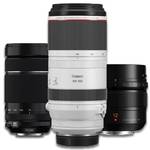
All Canon Lenses

93 products

Stay in the know

Beauty Photo of Sienna Etches

Beauty Lighting: How to Combine Hard and Soft Light to Make S...

A working beauty photographer’s guide to combining hard and soft light, beauty dish vs softbox, grids, negative fill and a clamshell setup you can copy, for skin that pops.

View post

Panel Discussion at Lunar Studios

Everyone Can Take a Picture. Not Everyone Can Hold the Room

What an agent, a Vogue visuals producer and a brand-side creative lead really look for in photographers now. There is a point in almost every creative career where the work alone stops...

View post

Beauty Photography Tips: Three Things I Wish I Knew Earlier

Beauty Photography Tips: Three Things I Wish I Knew Earlier

Beauty photography tips from Oliver Minnett’s Georges workshop, covering lighting, direction, working with a creative team, and using Sony and Profoto gear.

View post

Models on stage at Karla Spetics show

How We Lit Karla Spetic's Australian Fashion Week Show with P...

We were invited by Karla Spetic to help light her runway, we chose Profoto's new LED lights for the job!

View post
Ricardo sits with Ollie and discusses mobile podcasting setups

Sony A7R VI First Thoughts: A Portrait Photographer’s Take on...

Sony has just launched the new Sony A7R VI, the latest camera in its high-resolution Alpha line, and I was lucky enough to spend some time with it earlier this week. I...

View post
Ricardo sits with Ollie and discusses mobile podcasting setups

Mobile Podcasting Setups Explained: From First Rig to Full Pr...

Mobile podcasting isn’t about shortcuts. It’s about picking gear that actually works, in the places podcasts actually happen. I used to chase the “best” setup. Turns out, the best setup is the...

View post
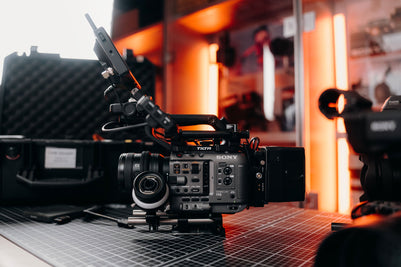
Tilta Sony FX Rigging

Rigging Up Your Sony Cinema Camera

Rigging gets a bad rap because a lot of rigs are built backwards. People buy parts first, bolt everything on, and end up with a camera that looks serious but shoots worse....

View post

Gracaie Stendl Portfolio Images

What Makes a Good Photographer? A Portfolio Deconstruction

Clyde Vaughan Guest post by Clyde Vaughan — ahead of  Clyde's talk on January 22: “How to create incredible images: A talk by Clyde Vaughan”. If you ask “what makes a good...

View post
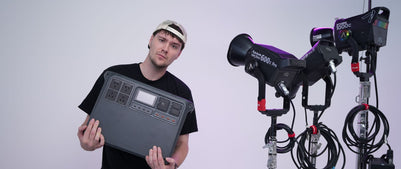
Ollie Jones holds the 22 kg DJI Power 2000

The End of the Generator? Hands-on with the DJI Power 2000

We’ve all been there: you’re on a remote shoot, beautiful location, but you’re either scrambling to find a power outlet or lugging a massive, noisy petrol generator through the bush. We’ve been...

View post
Oliver Minnett teaching a photography workshop

Why 2026 Might be the year to change from DSLR to Mirrorless

Alright—let’s do the DSLR vs mirrorless thing properly. Not “on paper”, not “in theory”, but head-to-head on the stuff that actually matters when you’re out shooting. My name's Oliver Minnett, I'm Georges...

View post

Frequently asked questions

What is the difference between a prime lens and a zoom lens?

A prime lens has a fixed focal length and often offers wider apertures and exceptional sharpness. A zoom lens covers multiple focal lengths, providing flexibility in dynamic shooting environments.

How do I know which lens is compatible with my camera?

Canon RF lenses are designed for Canon RF mount mirrorless cameras. Confirm your mount type to ensure full compatibility.

What are the benefits of a macro lens?

Macro lenses enable high magnification and close focusing, capturing fine detail for product, nature, and texture photography.

Can I use lenses from other brands on my Canon camera?

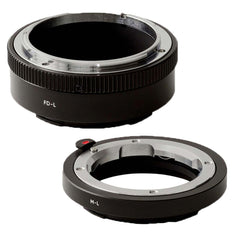
Adapters may allow cross-brand use, but native RF lenses typically provide the best autofocus and performance.

What should I consider for landscape photography?

Look for wide focal lengths, strong edge-to-edge sharpness, and weather sealing for outdoor conditions.

How do I maintain my Canon lenses?

Use lens caps, store lenses in dry conditions, clean with microfiber cloths, and avoid unnecessary exposure to dust and moisture.

Are there recommended lenses for portrait photography?

Yes. 50mm, 85mm, and 70–200mm lenses with wide apertures are popular for flattering compression and subject separation.

Why is aperture important?

Aperture controls light intake and depth of field. Wider apertures enhance low-light performance and create soft background blur.


Canon Lenses for Precision, Performance & Creative Control

Your lens defines your image. While camera bodies may upgrade over time, great Canon lenses remain at the core of your system, shaping perspective, sharpness, subject separation, and low-light capability.

Whether you’re capturing weddings, wildlife, commercial campaigns, or cinematic productions, the right lens unlocks the full potential of your Canon mirrorless body. At George’s Cameras, we stock a curated range of Canon RF lenses designed for professional reliability and creative flexibility.

From compact primes to versatile zooms and long-reach telephotos, our selection supports creators at every level.

Why Lens Quality Matters

A high-performance lens influences:

  1. Edge-to-edge sharpness
  2. Autofocus precision
  3. Colour accuracy and contrast
  4. Background compression and depth of field
  5. Low-light performance

Modern Canon RF lenses are engineered to communicate seamlessly with mirrorless bodies, delivering faster data transmission, refined stabilisation, and exceptional optical clarity. For high-resolution sensors and 4K/8K video workflows, lens quality becomes even more critical.

Investing in premium Canon lenses ensures your images stay sharp, detailed, and consistent across professional environments.

Types of Canon Lenses

Prime Lenses

Prime lenses offer a fixed focal length and are known for their clarity, lightweight design, and wide apertures.

A popular option is the Canon RF 50mm f/1.8 STM Lens. Compact and highly versatile, it delivers strong low-light performance and beautiful background blur. Ideal for portraits, street photography, and everyday creative work, it’s often considered an essential addition to any RF kit.

Prime lenses encourage intentional composition. With fewer moving elements, they often produce excellent sharpness and consistent rendering across the frame.

Zoom Lenses

Zoom lenses provide flexibility across multiple focal lengths, making them indispensable for events, travel, hybrid shooters, and fast-paced environments.

The Canon RF 24-70mm f/2.8L IS USM Lens is widely regarded as a professional workhorse. Its constant f/2.8 aperture and versatile focal range make it ideal for weddings, commercial projects, and documentary work.

For creators seeking extended flexibility in a single lens, the Canon RF 24-105mm f/4L IS USM Lens offers reliable performance across wide and mid-telephoto ranges.

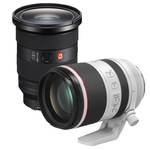
When reach and subject isolation matter, the Canon RF 70-200mm f/2.8L IS USM Z Lens delivers professional-grade sharpness and speed. It’s trusted by sports photographers and portrait specialists alike.

For wildlife and long-distance subjects, the Canon RF 100-500mm f/4.5-7.1L IS USM provides exceptional reach without compromising optical performance.

Zoom lenses allow photographers to adapt instantly without changing lenses mid-shoot, an advantage when timing is critical.

Specialty & Performance-Focused Lenses

Beyond standard primes and zooms, Canon’s RF ecosystem includes specialised optics built for specific creative demands.

These include:

  1. Ultra-wide lenses for landscapes and architecture
  2. Macro lenses for intricate close-up detail
  3. Super-telephoto lenses for wildlife and field sports
  4. Cinema-optimised optics for video creators

Specialty lenses help refine your creative direction and expand what’s possible within your system.

Choosing the Right Canon Lens

Selecting the ideal lens depends on your shooting style and workflow needs.

Focal Length

Wide-angle lenses (14–35mm) suit landscapes and interiors. Standard zooms (24–70mm) offer versatility. Telephoto ranges (70–200mm and beyond) isolate subjects and compress perspective.

Aperture

Wider apertures such as f/1.8 and f/2.8 allow more light and create strong subject separation. Narrower apertures provide greater depth of field for landscapes and group photography.

Stabilisation

Image stabilisation helps maintain sharpness in low light or when shooting handheld at longer focal lengths.

System Planning

Canon RF lenses are designed specifically for Canon RF mount mirrorless cameras. Choosing lenses strategically ensures long-term compatibility and system flexibility.

Our team can guide you through selecting Canon lenses that complement your current body and future upgrades

Canon’s Optical Reputation

Canon has built its reputation on precision engineering and professional durability. L-series RF lenses are particularly respected for:

  1. Weather-sealed construction
  2. Advanced optical coatings
  3. Fast, reliable autofocus
  4. Consistent colour and contrast rendering

For professionals working in demanding environments, reliability is as important as image quality. Canon RF lenses are engineered to perform consistently across commercial, wedding, wildlife, and cinematic applications

Supporting Your Complete Workflow

Modern sensors capture immense detail. To fully realise that performance, your lens must match the resolution and speed of your camera.

Pairing high-resolution bodies with premium Canon lenses ensures:

  1. Sharper results
  2. Faster autofocus tracking
  3. Improved low-light capability
  4. Greater creative control

Whether you’re refining a professional kit or building your first mirrorless setup, lens choice directly impacts image outcomes

Why Buy Canon Lenses from George’s Cameras?

George’s Cameras has been supporting Sydney photographers for over 40 years. We focus on giving clear, practical advice and stocking Canon lenses that deliver reliable real-world performance.

Whether you’re upgrading a single lens or building a complete RF kit, we help you choose gear that suits how you actually shoot. No jargon. No pressure. Just informed guidance and quality equipment you can trust.