


-v1665700116905.png?500x500&options=w_150)














Sony A7R VI First Thoughts: A Portrait Photographer’s Take on 66MP, Colour and Studio Workflow
Sony has just launched the new Sony A7R VI, the latest camera in its high-resolution Alpha line, and I was lucky enough to spend some time with it earlier this week.
I tested it from the perspective I actually care about most, which is portrait photography. Not lab charts. Not brick walls. Not sitting there reading the spec sheet back to you.
I photographed three different models in the studio, tethered the camera, worked with flash, tested the new battery grip, compared how it felt against the already excellent Sony A7RV , and tried to answer the question most photographers are probably going to ask pretty quickly. Is the Sony A7R VI actually a meaningful upgrade, or is it just a higher-resolution camera with bigger files?

On paper, the headline specs are strong. The A7R VI brings a new 66MP high-resolution sensor, faster shooting, improved autofocus, serious video capability, a new battery system, dual USB-C ports, a brighter viewfinder, and better ergonomics. But specs are only part of the story. What matters more is how the camera feels when you are actually working with it.
A bit of context on how I tested it
For context, I am coming at this as a working portrait and commercial photographer, not a lab reviewer.
I run a lot of photography workshops through Georges Cameras, shoot professionally across commercial, portrait, editorial and lifestyle work, and spend a lot of time teaching photographers how to think about cameras in the real world, not just how to compare numbers on a spec sheet.
Because that is usually where cameras either hold up or fall apart.
How does it behave when there is a person in front of you? How does it feel when a client is waiting? What happens when you are tethered, working with flash, managing a set, and trying to stay connected to the subject instead of being buried in a menu?
My work is very people-focused, so a lot of what I care about comes down to trust, direction, colour, skin tone, workflow, and how quickly I can stop thinking about the camera and stay present with the person I am photographing.
For this first test, I used the A7R VI the way I would actually use it. In the studio, handheld, photographing four different models, shooting with flash, tethering, and comparing it against what I already know from cameras like the A7R V and Sony A1.
This is not a full technical review. I did not shoot video, RAW support was not ready in Capture One during my test, and one studio session will never tell the whole story.
But it did give me a very clear first impression of the things that matter to me most: ergonomics, autofocus, colour, file size, studio workflow, battery life, and whether this camera feels like a proper step forward for portrait and commercial photographers.

The first thing I noticed was the grip
This sounds boring, but it matters.
I have a hand injury, and on long shoot days I can get pain from holding cameras for hours. The A7R VI felt immediately more natural in my hands. The grip wraps around better, it feels more secure, and it made the camera easier to hold for long stretches without feeling like I was fighting it.
That is not a flashy feature, but it is a real one.
The best part is that it still feels familiar. If you have used recent Sony Alpha bodies, you do not need to relearn how to shoot. The controls, setup, menus and overall shooting flow still feel like Sony.
It feels improved, not unfamiliar. That is what I want from a new camera. Make it better. Do not make me start again.
The battery grip is genuinely comfortable
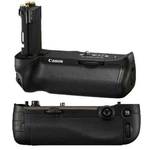
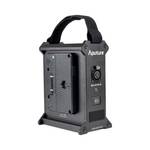
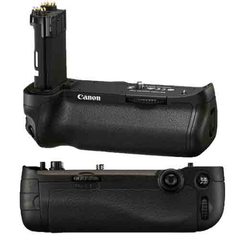
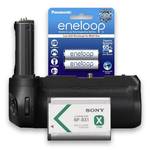
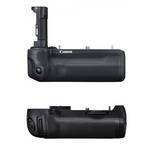
I also tested the new battery grip, which is designed specifically for the A7R VI and the new NP-SA100 battery system.
This will matter for portrait photographers.
If you shoot a lot in vertical orientation, the grip makes the camera feel much more balanced and comfortable. It adds the controls you actually need for portrait-orientation shooting, including a secondary shutter button, main dials, and a multi-selector, so you are not twisting your hand into some cursed little shape all day just to get through a set.
It also houses two NP-SA100 batteries and supports parallel power, which means longer run times and a clear display of the remaining life for both batteries.
The older Sony battery system was already good, but the A7R VI barely made a dent in the battery during my shoot. I shot all day and went through less than 20 percent, which is impressive.
Yes, moving to a new battery type is annoying if you already have a stack of older Sony batteries.
But after using it, I understand why Sony made the change.
66MP is beautiful, but it is not free
The A7R VI gives you a resolution bump over the A7R V, moving from the already huge 60MP class into 66MP territory.
On paper, that does not sound like a massive jump. In practice, it depends where you are coming from.
I have been very happy with the Sony A1’s 50MP files, so 66MP is definitely noticeable. The files have a lot of detail, and for portrait, fashion and commercial work, that gives you plenty of room to crop, retouch, print and refine without feeling like you are running out of image.
But there is a cost.
I filled a 160GB Sony Tough CFexpress Type A card during the shoot, and I honestly did not feel like I was overshooting.
That gave me pause.
Storage is not cheap right now, especially with rising demand on flash memory from AI and data centres. Big RAW files add up quickly, and if you shoot a lot, archive properly, and keep client work long-term, this is not a small consideration.
So yes, the resolution is fantastic.
But if you shoot straight RAW all day, you will feel it in your cards, drives and workflow.

You will want fast cards
This is not the camera to pair with slow media and hope for the best.
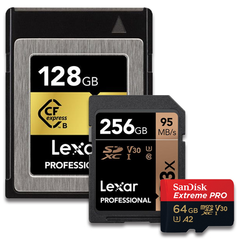
The files are big, the camera is fast, and if you want to make the most of the A7R VI, especially for bursts, tethering, high-resolution RAW workflows or video, you need fast cards.
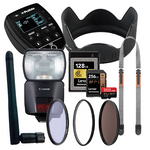
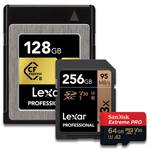
For this body, I would be looking at cards like the Wise 256GB CFexpress Type A or the Sony Tough 240GB CFexpress Type A.
You could use SD cards for lighter work, and for some photographers that will be completely fine, but if you are buying a camera like this for action, wildlife, events, fast portrait sessions or serious commercial work, CFexpress Type A makes a lot more sense.
The camera is too capable to be held back by slow storage.
The autofocus felt almost sticky, in the best way
Modern Sony autofocus is already excellent. I use these cameras a lot, and I have trusted Sony AF for years.
But the A7R VI felt faster and more persistent.
That is probably the word I was looking for: persistent.
Once it locked onto a subject, it did not feel eager to let go. If the model slowed down, looked away, moved slightly, or I reframed while half-pressing the shutter, the camera stayed with them.
It made recomposing feel really intuitive.
That matters in portraiture more than people realise, because good portraits are rarely just “stand still and smile.” You are moving, they are moving, you are changing framing, checking expression, shifting angle, and trying to keep the energy alive without stopping every two seconds to fight the camera.
If the camera keeps up without making you think about it, you stay connected to the person in front of you. That is where the A7R VI felt strong.

This does not feel like a slow high-resolution camera
The A7R line has traditionally been the choice for photographers who want detail, but are willing to accept some trade-offs in speed.
That trade-off feels much smaller here.
For my studio test, I was not trying to machine-gun portraits, but the camera felt quick, responsive, and more like an all-rounder than a specialist high-resolution body.
That is the important bit.
It does not feel like you are choosing resolution and giving up speed.
For portrait photographers who also shoot outdoors, events, fashion, wildlife, travel, or personal work on location, that matters. This camera feels like it has moved the A7R line closer to “do almost everything” territory.

The colour felt more natural, especially for skin
This was one of the biggest things for me.
Because the camera is so new, RAW support was not available for Capture One during my test. I tethered JPEGs, which is not normally how I would judge a camera properly, but it did give me a good look at Sony’s out-of-camera colour.
And honestly, I liked it.
The skin tones felt more natural. There was a subtle shift in the colour that made the files feel easier to work with, and I did not get that immediate sense that I was going to have to pull the file apart just to get skin where I wanted it.
I have sometimes had concerns with Sony files around colour, especially with skin, where you can get there but occasionally feel like you are having to work harder than you should.
With the A7R VI JPEGs, I did not feel that same fight.
I am not going to pretend I can make a final call until I can process the RAW files properly, but from what I saw, this feels like an improvement.
For portrait photographers, that matters more than most specs.

Studio workflow was smooth, once set up
I used the camera in a studio environment, tethered, with flash.
No sync issues. No dramas. The camera plugged in and behaved.
The only pain point was the normal new-camera setup process: making sure USB-C behaviour was set properly, making sure it preferred tethering when connected through the correct port, and getting everything talking the way I wanted.
But I really liked that the camera has dual USB-C ports and lets you define behaviour more clearly.
One port can be used for power, another for tethering, or configured around other workflow needs. Once set up, that kind of flexibility will speed things up for working photographers.
That is the kind of small professional improvement that does not sound exciting, but becomes very useful on set.
The viewfinder is a proper step forward
The A7R VI’s viewfinder is big, bright and genuinely enjoyable to use.
I used to really miss optical viewfinders. Early electronic viewfinders often made me feel slightly removed from the shoot, like I was looking at a small screen instead of being inside the moment.
That feeling is becoming less and less true.
The A7R VI’s EVF helped keep me connected while shooting. It is bright, clear, and feels less like a compromise than EVFs used to.
That is a quiet but meaningful improvement.

The illuminated buttons are more useful than they sound
This is another one of those features that sounds small until you need it.
The A7R VI has illuminated buttons, which will be useful for photographers working in dark studios, backstage areas, events, astro, low-light locations or early morning landscape setups.
It ties into the broader ergonomic story.
This camera feels like Sony is paying more attention to the way photographers actually work, not just the spec sheet they can advertise.
The lenses I would pair with it
For portrait and commercial work, lens choice matters a lot with a body like this.
A 66MP camera is unforgiving in the best and worst ways. If the lens is soft, if focus is slightly off, or if the optics cannot keep up, you will notice.
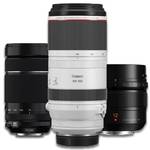
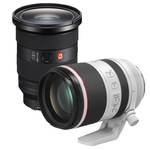
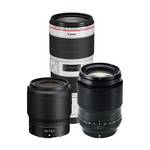
If I were buying this body and did not already own the lenses, the three I would be looking at first are the Sony FE 50mm f/1.4 GM, Sony FE 24-70mm f/2.8 GM II, and Sony FE 70-200mm f/2.8 GM OSS II.
The Sony FE 50mm f/1.4 GM is a brilliant everyday portrait lens. Sharp, fast, lightweight and versatile.
The Sony FE 24-70mm f/2.8 GM II is the workhorse, and it was the lens I used most during my test. For studio, commercial, events, portraits and general work, it is hard to argue against.
The Sony FE 70-200mm f/2.8 GM OSS II gives you beautiful compression, fast autofocus, strong portrait rendering and plenty of flexibility when you need distance or separation.
I also really love the Sony FE 85mm f/1.4 GM II. It is a fantastic portrait lens and much lighter than the older SLR systems I grew up using.
That is one of the big benefits of the current Sony system. The lens selection is excellent, and a lot of the newer GM glass gives you high-end performance without feeling like you are carrying a brick all day.
The lighting setup we used
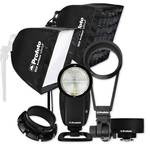
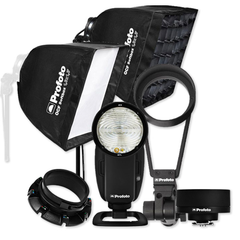
For this studio test, we used a mix of Profoto lighting and shaping tools.
The lights included the Profoto Pro-D3 1250, Profoto Pro-B3, Profoto Pro-B20 and Profoto Connect Pro remote.
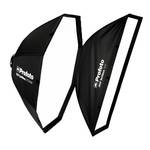
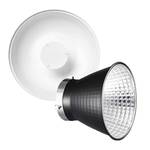
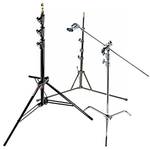
For modifiers and shaping, we used the Profoto Softlight Reflector in white, Profoto Translucent Deep XL Umbrella, Manfrotto 2x2 scrim, and Avenger 2030DCB C-stands.
This was not about trying to create an overly complicated lighting setup. It was about seeing how the camera handled clean studio portrait conditions, skin tone, tethering, flash and detail.
The A7R VI handled it well.
Video looks serious, even if I did not test it
I did not shoot video with the A7R VI, so I am not going to pretend this is a video review.
But the specs are strong. The camera has 8K30 and 4K120 capability, and it is clearly a much more serious hybrid option than older high-resolution bodies.
My only question would be sensor readout speed in real-world motion before I leaned on it heavily for action work. On paper, it looks highly capable, but I would want to test it properly before making big claims.
For hybrid shooters, though, this is clearly a more interesting A7R than before.
Who is the Sony A7R VI for?
From my first test, I think the A7R VI makes a lot of sense for portrait photographers, fashion photographers, commercial photographers, landscape photographers, wildlife and bird photographers, Sony A7R III or A7R IV users looking for a serious upgrade, and Sony A1 users who want high resolution without paying A1 II money.
For portrait and commercial work, the resolution, colour, viewfinder and ergonomics are the big drawcards.
For wildlife and bird photographers, the combination of high megapixels, longer battery life, stronger autofocus and fast electronic shooting makes it a very serious option.
For landscape photographers, it is simple. This is now Sony’s highest-resolution full-frame body, with better handling and more flexibility than before.

Should A7R V owners upgrade?
This is the hard question.
The Sony A7R V is still a very capable camera. If you are happy with it, and you do not need the speed, new battery, improved ergonomics, stronger video features or stacked sensor benefits, you probably do not need to panic.
But if you skipped a generation or two, especially if you are on the A7R III or A7R IV, this is a much more compelling jump.
It also makes sense for A1 users who want a newer body but do not want to spend A1 II money.
You get a lot of camera here.
The A7R VI feels less like “just another high-resolution body” and more like Sony trying to remove the usual compromises from the high-resolution category.

My conclusion
The Sony A7R VI feels like Sony has listened.
The comfort is better. The colour feels better. The autofocus feels more persistent. The camera is fast. The viewfinder is excellent. The battery life is genuinely strong. The dual USB-C setup is a smart workflow improvement.
The A7R V was already a very good camera, but the A7R VI feels like a bigger evolution than the megapixel number suggests.
The 66MP files are beautiful, but they are also large. Storage, cards and workflow need to be part of the conversation. This is not a casual camera for people who do not want to deal with big files.
But for serious portrait, fashion, commercial, landscape, wildlife and bird photographers, this camera feels extremely capable.
The Sony A7 V was a good release, but I think a lot of people were slightly underwhelmed by it.
The A7R VI feels different.
It feels like Sony reminding everyone they are not ready to give up their grip on the mirrorless market.
- Oliver Minnett