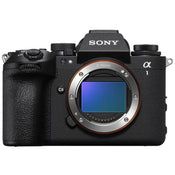

























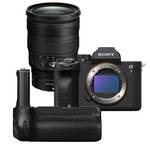


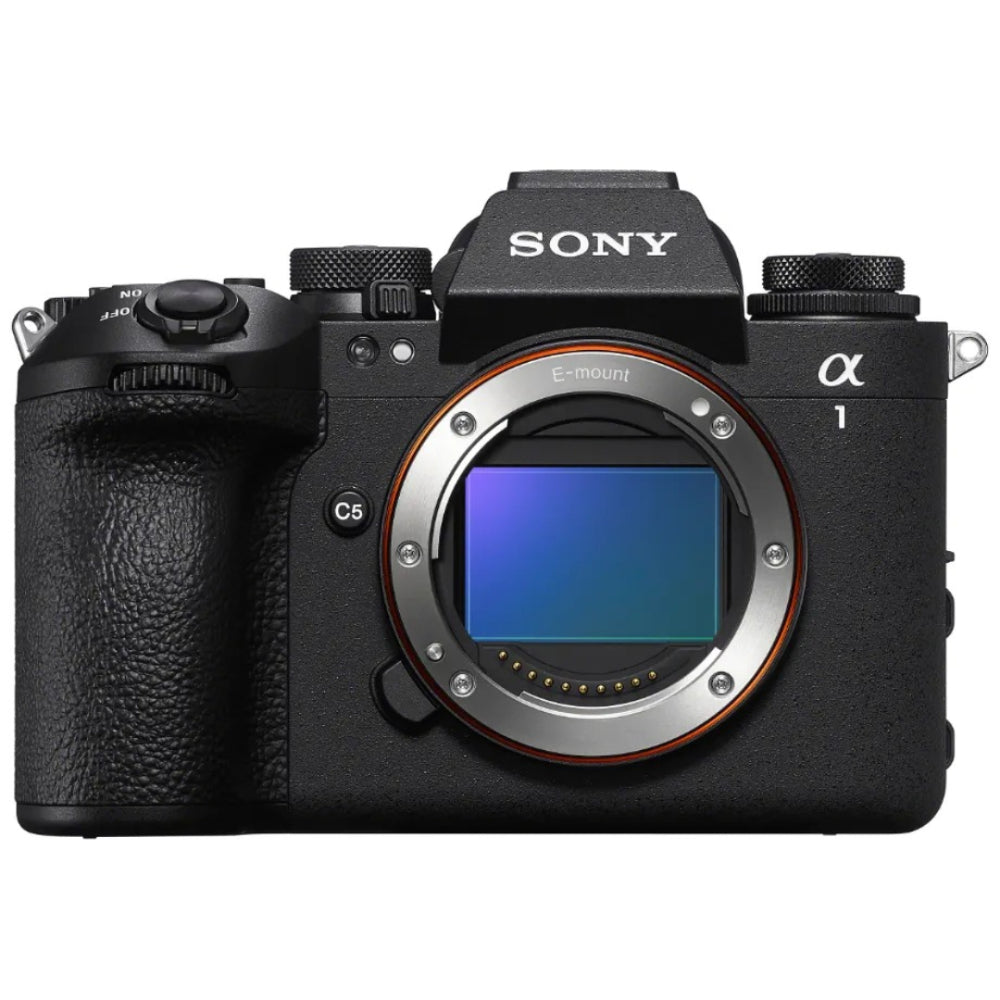
Sony A1 II Mirrorless Camera Body Only
What's included (1)
Checking availability...
Availability
- Availability: In stock (1 - 2 days)
- Express insured: $15.95 (1-4 days)
- Standard insured: $9.90 (3-7 days)
Price Match
Fill out the price match form below, and we will be in touch shortly.

Price Match
Fill out the price match form below, and we will be in touch shortly.
If you'd like to know when it's due, we're here to help!
Call us during business hours at 02 9299 0177.
Chat live with our team on-site.
Or email us anytime at info@georges.com.au with the subject "Awaiting Arrival"Recommended accessories
View all
$2,395.00$2,699.00
$103.20$129.00
$565.75$689.95
Product Overview
Sony A1 II Mirrorless Camera Body Only
The Sony a1 II is their most versatile camera yet, offering the best overall mixture of speed, video capabilities, high-resolution stills, and a robust, professional-worthy body design. It pulls much of the original a1's well-rounded feature-set into an a9 III body and adds the AF and IBIS technologies introduced with the a7R V. It's a camera meant for working professionals, whether they are sports, editorial, product, fashion, or advertising shooters, and it's equally appealing to landscape, portrait, wedding, and event photographers, too. And, beyond photography, it has the video tools the a1-series is known for, including 8K recording, along with useful stabilisation and framing aids borrowed from the ZV class of cameras.
The original a1 was already known for its strong imaging performance and the a1 II improves on this with upgraded BIONZ XR processing, an AI processing unit, more powerful 8.5-stop IBIS, and the impressive 50MP stacked BSI CMOS sensor from its predecessor. The sensor and processor still afford a top 30-fps shooting rate, expandable sensitivity from ISO 50-102400, and an impressive 15-stop dynamic range. Additionally, on the speed front, the a1 II gains the Pre-Capture and Speed Boost functions that debuted on the a9 III.
Sensor and Processing Improvements
Up to 30 fps continuous shooting with an electronic shutter, or 10 fps with the mechanical shutter, with AF and AE supported.
Pre-Capture Shooting records at up to 30 fps for up to 1 second prior to fully pressing the shutter, helping to ensure you don't miss fleeting moments.
Speed Boost lets you vary your continuous shooting speed mid-burst; when the C5 button is depressed while burst shooting, you can switch from the chosen continuous shooting speed to a faster or slower one to suit the pace of action you're photographing.
Refined 5-axis in-body image stabilisation compensates for up to 8.5 stops of camera shake at the centre of the frame and 7 stops at the periphery; an improvement of 3 stops of shake control compared to the original a1.
Same full-frame 50MP stacked BSI CMOS sensor as the a1, mixing high resolution with the speed and reduced rolling shutter of a stacked design to suit both meticulous and quick-working shooters.
Smarter, Faster Autofocus and Subject Tracking
The a1 II's focusing system received similarly significant upgrades from its predecessor, now sporting an AI Processing Unit and refined subject detection and tracking. The phase-detection AF system itself still comprises 759 points, which cover about 92% of the sensor area, and support focusing down to -4 EV at f/2. Subject tracking and subject detection is improved, too, specifically how the camera is 30% faster at detect human eyes and 50% faster with animal eyes.
First seen in the a7R V and a9 III, the a1 II sports a dedicated AI Processing Unit for refined, responsive, and intelligent subject tracking and detection of humans, animals, birds, insects, cars, trains, and airplanes.
Human pose estimation tracks body and head positions for accurate focus in portraiture and sports settings and Real-time Eye AF performance has been improved by 30%.
Additionally, human pose estimation can distinguish between multiple people and maintain focus on the targeted subject; even if someone crosses in front, the camera maintains focus on the key person.
Real-time Tracking benefits from AI-based subject recognition for following moving subjects, making it particularly well-suited to sports and action subjects.
Auto Subject Recognition modes no longer necessitate selecting a subject type, letting the camera detect and track the intended subject.
XS and XL focus area spot sizes have been added for more versatility or you can customise AF focus areas to suit uniquely sized or shaped subjects.
Full-time DMF (Direct Manual Focus) enables using the lens's focus ring for manual focus control at any time, making it easier to switch focus to a different subject even when working with AF.
Alpha's Video Capabilities
The core video specs of the original a1 were ahead of their time, and in many ways, still are. The a1 II keeps many of the core resolutions and frame rates but refines the video recording capabilities with more supportive modes and features, including access to Dynamic Area Stabilisation and timecode input with an optional adapter. This makes the a1 II just as capable on a professional film set as it is in a photography studio.
Familiar recording formats: 8K 30p with 10-bit 4:2:0 sampling and 4K 120p with 10-bit 4:2:2 sampling. When using a Super 35 recording area, 4K footage can use 5.8K oversampling for improved detail and the full-frame area offers 8.6K oversampling for the 8K footage.
AI subject recognition, gained from the AI Processing Unit, benefits the Framing Stabiliser mode, which can be used to automatically crop and recompose so the subject remains centreed in the image.
Dynamic Active Mode Stabilisation also helps retain accurate framing while filming, especially when recording while walking or moving.
Included S-Cinetone profile, ProRes RAW output over HDMI, and the ability to import LUTs all point to the great amount of colour control the a1 II offers.
Support for Breathing Compensation mode, which reduces the effects of focus breathing when using select lenses.
Pre-Capture & Speed Boost-Never Miss a Moment
Along with the key technology delivered by the sensor, the a1 II brings additional features to unlock the camera's full potential.
Pre-Capture: The a1 II can be configured to begin recording images to the buffer when the shutter button is half-pressed. Users can set this between 0.03-1.0 second. Upon pressing the shutter these images will be saved to the memory card.
Speed Boost: With Speed Boost and the C5 button, which is conveniently placed near the grip on the front of the camera, users can instantly switch their camera from their usual continuous shooting frame rate to a faster one to make sure their next shot is just right. Photographers will be able to select various frame rates up to 30 fps.
Professional Body Design and Connectivity
The a1-series has always been a top-of-the-line model for Sony and, as such, had one of the most durable and refined physical designs within the system. The a1 II, though, gains a bit of an upgrade to bring it in line with the a9 III in terms of button layout, screen and EVF implementation, and durability. It's a camera built for professional use and has the strongest, most reliable design in Sony's lineup.
Versatile and Durable Design
The a1 II gains the latest Sony mirrorless body design first seen on the a9 III which includes a C5 custom button on the front of camera body and an enhanced grip.
For transferring, an upgraded 2.5GBASE-T wired LAN port offers faster transfer speeds to suit high-profile tethered shooting applications. There is also a USB-C port and a full-size HDMI port.
USB-C port offers fast USB 3.2 Gen 2 speeds of up to 10 Gb/s.
Dual memory card slots both accept either CFexpress Type A or SD-type memory cards. The dual slot design allows for flexible file saving and handling and can be configured to partition file types or can be used for overflow recording. Additionally, both of the card slots are rated to support UHS-II memory cards for faster transfer speeds.
Tru-Finder EVF and Tilting Touchscreen LCD
An impressive QXGA OLED Tru-Finder EVF features a high 9.44m-dot resolution and 0.9x magnification for exceptionally bright, clear, and detailed eye-level viewing. There is also a 120-fps option that maintains the higher resolution for a better mixture of clarity and motion fluidity.
3.2" 2.1m-dot 4-axis multi-angle touchscreen LCD-first seen on the a7R V. This screen has a wide colour gamut covering the DCI-P3 space.
Intuitive menu structure that complements having different workflows with different settings selections for movie recording and stills shooting. The menu system also works in conjunction with the touchscreen design of the rear LCD.
Key Features:
50MP Full-Frame Stacked BSI CMOS Sensor
AI Tracking & Human Pose Estimation
8K 30p and 4K 120p Video in 10-Bit
Up to 30 fps Shooting with AF/AE
Pre-Capture & Speed Boost Button
8.5-Stop IBIS + Dynamic Stabilisation
9.44m-Dot EVF with 240 fps Refresh Rate
3.2" 2.1m-Dot 4-Axis Touchscreen LCD
5 GHz MIMO Wi-Fi, 2.5GBASE-T Ethernet
Dual CFexpress Type A/SD Card Slots
What's in the box:
Sony A1 II Mirrorless Camera Body Only
NP-FZ100 Battery (2280mAh)
BC-ZD1 Dual-Battery Charger for NP-FZ100 Batteries
ALC-B1EM Body Cap for E-Mount Cameras
FDA-EP19 Eyepiece Cup
FDA-EP21 Deep Eyepiece Cup
Multi Interface Shoe Cap
Cable Protector
Shoulder Strap

Need advice?
Speak to one of our dedicated Australian-based sales team members.
Key Features
50.1 Megapixels
Capture stunning high resolution images with the 50.1MP Exmor RS CMOS sensor.
8K Video Quality
The Sony A1 II shoots at up to 10bit 8K/30p and 4K 50/60p for stunning cinematic quality video.
Wi-Fi and Bluetooth
With built in Wi-Fi and Bluetooth you can easily transfer images from your camera to your phone.
Electronic Viewfinder
The Sony A1 II is equipped with a high resolutions 9.44M dots electronic viewfinder.
3.2" LCD Screen
The fully articulated 4-axis 3.2" touchscreen enabled LCD screen of the Sony A1 II makes using it a breeze.
Sony FZ-100
Quick Charge – Power up two Sony FZ-100 batteries in just 155 minutes.
FAQs
What are the key advancements in the autofocus system of the Sony A1 II?
The Sony A1 II features a sophisticated AI Processing Unit that enhances its autofocus capabilities. It utilises real-time recognition and employs advanced 759-point phase detection autofocus to ensure exceptional accuracy and speed. This system allows for seamless transitions between eye, face, and body tracking, even in challenging conditions, making it ideal for fast-moving subjects.
How does the image stabilisation system work in the Sony A1 II?
The A1 II incorporates an upgraded 5-axis in-body image stabilisation system, providing up to 8.5 stops of stabilisation. This is achieved through a combination of advanced algorithms and a high-precision gyro sensor, which allows for precise detection and control. As a result, photographers can capture sharp images even when using longer lenses or shooting in low light, significantly reducing the impact of camera shake.
What are the benefits of the Composite RAW shooting modes?
The Composite RAW shooting modes in the Sony A1 II, including NR Shooting and Pixel Shift Multi Shooting, offer significant advantages for specialised photography. NR Shooting allows the camera to capture multiple RAW images that can be composited for lower noise levels at high sensitivities, while Pixel Shift Multi Shooting produces incredibly detailed images, reaching up to 199 Megapixels. This is particularly beneficial for landscape and product photography, where detail and clarity are paramount.
How does the ergonomic design of the A1 II enhance usability for photographers?
The Sony A1 II features an enhanced grip with a subtly reclined design, making it more comfortable to hold for extended periods. The repositioned shutter button provides more intuitive access for decisive shutter action. Additionally, the new customisation options for release lag allow photographers to fine-tune the camera's responsiveness, ensuring it aligns perfectly with their shooting style.
Can you explain the advantages of the 4-axis multi-angle LCD monitor?
The 4-axis multi-angle LCD monitor on the A1 II offers exceptional flexibility, allowing photographers to adjust the screen in both tiltable and side-opening directions. This feature is particularly useful in challenging shooting scenarios, such as capturing low or high-angle shots, ensuring that users can maintain a clear view of the composition without straining their posture.
What improvements have been made to image processing in the A1 II?
The A1 II is equipped with improved BIONZ XR image processors that enhance mid-to-high ISO image quality and detail. These enhancements ensure more consistent exposure and colour accuracy between shots, while maintaining the camera's impressive 15-stop dynamic range. This results in rich, vibrant colours and exceptional detail, making it suitable for a wide range of photographic applications.
What type of creators would benefit most from using the Sony A1 II?
The Sony A1 II is designed for professional photographers and videographers who demand top-tier performance across various photographic disciplines. Its advanced autofocus system, outstanding image stabilisation, and high-resolution capabilities make it ideal for action photography, wildlife, sports, and high-resolution landscape or commercial work. Creators looking for a versatile camera that excels in both stills and video will find the A1 II particularly valuable.

Sony A1 II Mirrorless Camera
Masterpiece of Speed & Precision

Unmatched Detail and True Fidelity
Enhanced BIONZ X processors boost ISO detail, exposure, and colour, maintaining 15-stop dynamic range.
Unbreakable Focus – Precision Redefined
The AI chip takes the Alpha 1's exceptional autofocus to new heights. By analysing the subject's full spatial position, it maintains precise focus even in demanding conditions. Effortlessly switching between eye, face, and body focus, it ensures unmatched accuracy with every shot.
Image Gallery
Product Reviews
Recommended Accessories
Blog posts
Sigma 28-45mm T2 FF AF Cine Review: Cinema Glass That Focuses...
The Sigma AF Cine 28-45mm T2 FF combines the optical performance of Sigma’s popular Art series with professional cinema features and reliable autofocus. In this hands-on review, Laz puts the lens through...
View post
Insta360 X6 Review: 500 km Across the Simpson Desert
We put the Insta360 X6 to the ultimate test across 500 km of the Simpson Desert! From stunning low-light footage and 8K 360° video to replaceable lenses and wireless audio, discover how...
View post
Canon G7 X Mark III vs Fujifilm X100VI: Which Should You Buy?
Compare the Canon PowerShot G7 X Mark III vs Fujifilm X100VI in our real-world camera comparison. Discover the differences in image quality, low-light performance, colour, video features, zoom, and price to find...
View post

Tamron 16-50mm F2.8 vs Sigma 18-50mm F2.8: Which Compact APS-...
If you shoot on an APS-C mirrorless camera and want one lens that stays on the body most of the time, there's a good chance the Sigma 18-50mm F2.8 DC DN Contemporary...
View post
The Ultimate Guide to PTZ Cameras: Choosing the Right Setup f...
Compare Canon, Sony, BirdDog and Telycam PTZ cameras on image quality, tracking, zoom and value. Find the right setup for your production at Georges Cameras.
View post

Beauty Lighting: How to Combine Hard and Soft Light to Make S...
A working beauty photographer’s guide to combining hard and soft light, beauty dish vs softbox, grids, negative fill and a clamshell setup you can copy, for skin that pops.
View post

Everyone Can Take a Picture. Not Everyone Can Hold the Room
What an agent, a Vogue visuals producer and a brand-side creative lead really look for in photographers now. There is a point in almost every creative career where the work alone stops...
View post
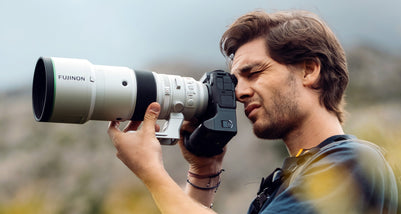
Beyond Reach: My Experience With the Fujifilm XF400mmF4.5 Sup...
Explore our hands-on experience with the Fujifilm XF400mmF4.5, covering its sharpness, autofocus, reach and performance for sport, wildlife, landscapes and portraits.
View post
Learn to Get the Shot Right In-Camera
Beauty photography tips from Oliver Minnett’s Georges workshop, covering lighting, direction, working with a creative team, and using Sony and Profoto gear.
View post

Stop Trying to Learn Everything at Once
Beauty photography tips from Oliver Minnett’s Georges workshop, covering lighting, direction, working with a creative team, and using Sony and Profoto gear.
View post