





-v1665700116905.png?500x500&options=w_150)
























Sigma 50-100mm f/1.8 DC HSM Art Lens for SIGMA
SIGMA was determined to create a zoom lens that offers the same brightness and resolution as a fixed focal length lens: in other words, the highest level of optical performance and expressive power. The first result of this challenge was the SIGMA 18-35mm F1.8 DC HSM | Art. In addition to fulfilling the exacting requirements of SIGMA’s Art line, this lens was the world’s first APS-C zoom for DSLRs to offer a constant F1.8 aperture value throughout the zoom range. Building on this concept, SIGMA has developed the new SIGMA 50-100mm F1.8 DC HSM | Art lens, a large-diameter mid-range telephoto zoom lens. While offering even greater brightness than a F2.8 telephoto zoom, this lens covers the focal lengths of three prime lenses in one package: 85mm F1.8, 105mm F1.8, and 135 mm F1.8 (35mm equivalent). A true game-changer, this lens is ideal for portraits with subtle bokeh effects and more, and it sets a new standard for zoom lens image quality.
Technologies that realize Art line image quality in a zoom lens
FLD glass, SLD glass, and high-refractive index, high-dispersion glass help minimize aberrations
To help minimize axial and transverse chromatic aberration, this lens features an optimal arrangement of three FLD (“F” Low Dispersion) glass elements, one SLD (Special Low Dispersion) glass element, three high-refractive index SLD glass elements, and one high-refractive index, high-dispersion glass element. By including one or more low-dispersion element in every element group, this lens ensures outstanding image quality throughout the zoom and focal range.
Featuring a newly designed Hyper Sonic Motor
To achieve outstanding image quality and F1.8 brightness, SIGMA has enhanced its Hyper Sonic Motor (HSM). Optimizing the layout as well as the shapes of the individual parts, SIGMA has made the HSM 30 percent slimmer than before. In turn, this slimmer HSM has made possible the combination of F1.8 brightness and high image quality in a zoom lens. As with the previous SIGMA HSM, at any time during AF, users may access MF simply by rotating the focus ring. This feature makes faster focus adjustment possible, since there is no need to use the AF/MF focus mode switch. Also, the optional SIGMA USB DOCK allows the user to set the lens to conventional full-time manual focus override.
Diaphragm unit designed for smooth operation
The diameter of the diaphragm is the second-largest in the SIGMA lens lineup after that of the SIGMA 200-500mm F2.8 /400-1000mm F5.6 EX DG, necessitating smoother and quicker operation than ever before. To achieve this goal, the diaphragm blades feature Carbon Feather film, and the diaphragm unit features a new polycarbonate made with fluorine. Thanks to these innovations, diaphragm operation is exceptionally smooth even during continuous shooting, while the new polycarbonate is exceptionally durable and wear-resistant.
Designed to minimize flare and ghosting
From the start of the design process, SIGMA measured flare and ghosting to establish an optical design that is resistant to strong incidental light sources such as backlight. At the prototyping stage, SIGMA used not only simulations but actual photographic experiments to assess flare and ghosting under multiple criteria, identify the causes of these issues under a wide range of situations, and take measures to mitigate them. In addition, SIGMA’s Super Multi-Layer Coating helps further reduce flare and ghosting and provide sharp, high-contrast images even in backlit conditions.
Outstanding zoom lens maneuverability
Realizing the style of operation the same with the SIGMA 18-35mm F1.8 DC HSM | Art.
Inner focus and inner zoom
Since its release, the SIGMA 18-35mm F1.8 DC HSM | Art has been widely used for videography. Understanding that the SIGMA 18-35mm F1.8 DC HSM | Art and new SIGMA 50-100mm F1.8 DC HSM | Art will often be used together, SIGMA has made the style of operation the same for both lenses, including the feel of focusing and zooming. Thanks to SIGMA’s inner focus and inner zoom technologies, adjusting the focus and zoom rings does not change the length of the lens, and turning the zoom ring is not prone to cause focus shift.
Tripod socket designed for stable, comfortable operation
The tripod socket is compact, making operation more stable and comfortable during handheld photography. Parts with electro-less nickel plating help ensure the quality and durability of the 90-degree click stops and smooth switching between the horizontal and vertical position. The shape of the socket also enhances ease of handling and carrying when the lens is not attached to a camera.
Exclusive low-dispersion glass
The degree to which light is refracted by glass depends on the light's wavelength. This fact causes different colors of light to focus at slightly different points. The result is chromatic aberration, the color fringing that is particularly noticeable in telephoto lenses. Most chromatic aberration can be removed by combining a high-refractivity convex lens element with a low-refractivity concave element. Yet residual chromatic aberration known as “secondary spectrum” may still remain. To minimize this secondary spectrum, which can be a serious issue with conventional lenses, SIGMA lenses feature up to three types of exclusive low-dispersion glass offering superior performance: ELD (Extraordinary Low Dispersion), SLD (Special Low Dispersion) and FLD (“F” Low Dispersion). In particular, FLD glass offers ultra-low dispersion in combination with high transmittance and the anomalous dispersion characteristics of fluorite. Meticulous deployment of these types of exclusive low-dispersion glass and optimization of power distribution gives SIGMA lenses superlative image rendition undiminished by residual chromatic aberration.
The Design Concept
In our new product lines, the lens caps and AF/MF switches are newly designed to improve usability. To ensure precise operation, internal parts feature generous use of metal and Thermally Stable Composite (TSC)*, which is highly compatible with metal parts. The lens barrel is engraved with the year of release for instant access to this information.
New SIGMA GLOBAL VISION product lines are setting new benchmarks for image quality
Evaluation with SIGMA’s own MTF measuring system: A1
We used to measure lens performance with a Modulation Transfer Function (MTF) measuring system using conventional sensors. However, we have developed our own proprietary MTF measuring system (A1)* using 46-megapixel Foveon direct image sensors. Even previously undetectable high-frequency details are now within the scope of our quality control inspections. All SIGMA 50-100mm F1.8 DC HSM | Art lenses are checked using this A1 system before they are shipped.
46-megapixel Foveon direct image sensor
The 46 effective megapixel (4,800 × 3,200 × 3 layers) and 44 recording megapixel (4,704 × 3,136 × 3 layers) 23.5 × 15.7mm APS-C X3 direct image sensor captures all primary RGB colors at each and every pixel location, ensuring the capture of full and complete color. Using three silicon-embedded layers of photo detectors, stacked vertically to take advantage of silicon's ability to absorb red, green and blue light at different respective depths, it efficiently reproduces color more accurately, and offers sharper resolution, pixel for pixel, than any conventional image sensor. Since color moiré is not generated, the use of a low-pass filter is not required, meaning light and color, generated by the 46-megapixel APS-C X3 direct image sensor is captured with a three-dimensional feel.
Ultra-high precision and quality—all made in Japan.
With only a few minor exceptions, all of SIGMA's manufacturing, including molds and parts, takes place under a single integrated production system in Japan. We are now one of the very few manufacturers whose products are truly made in Japan. We like to think our products are somehow imbued with the essence of our homeland, blessed as it is with clean air and water, and focused, hard-working people. We pride ourselves on the authentic quality of SIGMA products, born of a marriage between highly attuned expertise and intelligent, advanced technology. Our sophisticated products have satisfied professionals and lovers of photography all over the world because our manufacturing is based on genuine craftsmanship, underpinned by the passion and pride of our experts.
SIGMA USB DOCK makes customization and flexible adjustment possible
SIGMA USB DOCK for SIGMA GLOBAL VISION lenses (optional)
With the optional SIGMA USB DOCK, you can update your lens firmware and adjust the focus position and other settings. Simply connect the lens to the SIGMA USB DOCK and the dock to a computer to use the dedicated SIGMA Optimization Pro software and perform various types of customization and adjustment.
Compatibility
Sigma 50-100mm f/1.8 DC HSM Art Lens for SIGMA
- Lens construction: 21 elements in 15 groups
- Minimum aperture: F16
- Filter size: φ82㎜
- Angle of view(DC): 31.7° - 16.2°
- Minimum focusing distance: 95cm / 37.4in.
Price Match
Fill out the price match form below, and we will be in touch shortly.

Price Match
Fill out the price match form below, and we will be in touch shortly.
 If you'd like to know when it's due, we're here to help!
 Call us during business hours at 02 9299 0177.
 Chat live with our team on-site.
 Or email us anytime at info@georges.com.au with the subject "Awaiting Arrival"
Checking availability...
Product Overview
SIGMA was determined to create a zoom lens that offers the same brightness and resolution as a fixed focal length lens: in other words, the highest level of optical performance and expressive power. The first result of this challenge was the SIGMA 18-35mm F1.8 DC HSM | Art. In addition to fulfilling the exacting requirements of SIGMA’s Art line, this lens was the world’s first APS-C zoom for DSLRs to offer a constant F1.8 aperture value throughout the zoom range. Building on this concept, SIGMA has developed the new SIGMA 50-100mm F1.8 DC HSM | Art lens, a large-diameter mid-range telephoto zoom lens. While offering even greater brightness than a F2.8 telephoto zoom, this lens covers the focal lengths of three prime lenses in one package: 85mm F1.8, 105mm F1.8, and 135 mm F1.8 (35mm equivalent). A true game-changer, this lens is ideal for portraits with subtle bokeh effects and more, and it sets a new standard for zoom lens image quality.

Need advice?
Speak to one of our dedicated Australian-based sales team members.
Key Features
Price Match
Fill out the price match form below, and we will be in touch shortly.
Price Match
Fill out the price match form below, and we will be in touch shortly.
Product Reviews
Blog posts
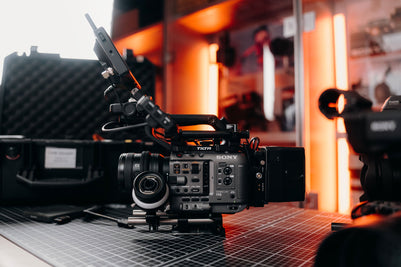
Rigging Up Your Sony Cinema Camera
Rigging gets a bad rap because a lot of rigs are built backwards. People buy parts first, bolt everything on, and end up with a camera that looks serious but shoots worse....
View post
What Makes a Good Photographer? A Portfolio Deconstruction
Clyde Vaughan Guest post by Clyde Vaughan — ahead of Clyde's talk on January 22: “How to create incredible images: A talk by Clyde Vaughan”. If you ask “what makes a good...
View post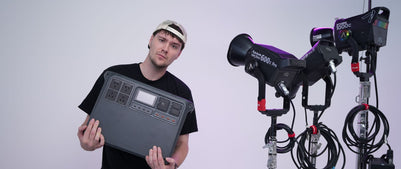
The End of the Generator? Hands-on with the DJI Power 2000
We’ve all been there: you’re on a remote shoot, beautiful location, but you’re either scrambling to find a power outlet or lugging a massive, noisy petrol generator through the bush. We’ve been...
View post
Why 2026 Might be the year to change from DSLR to Mirrorless
Alright—let’s do the DSLR vs mirrorless thing properly. Not “on paper”, not “in theory”, but head-to-head on the stuff that actually matters when you’re out shooting. My name's Oliver Minnett, I'm Georges...
View post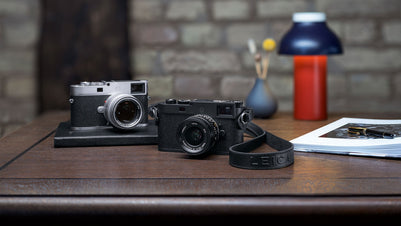
Leica is now at Georges Cameras
Some cameras don’t just document your life; they become part of it. I bought a Leica M6 in 2012. Photography had always been a part of my life; my dad had run...
View post
5 Things to Know Before You Upgrade Your Camera
Upgrading your camera? Learn the 5 things that matter: sensor size, ergonomics, lenses, power/media, and colour/screens—so you can choose the right camera with confidence.
View post
Canon G7X Mark III vs Sony, Panasonic, Ricoh & Fujifilm: Best...
Looking beyond the Canon G7X Mark III? We compare the best compact cameras from Sony, Panasonic, Ricoh and Fujifilm to help you choose the right model for 2025.
View post
Couples Photography: Get Real Moments, Not Stiff Poses
Clyde Vaughan shares five great tips that consistently make couples shoots shoots feel easy and look incredible for Georges Cameras.
View post
Canon EOS R6 Mark III Review: First Impressions, Real-World P...
In this post, we review the new Canon EOS R6 Mark III Camera and the RF 45mm F1.2 STM Lens.
View post
First Look: Fujifilm X-T30 III - The Little Legend Returns
In this post we review the new Canon EOS C50!
View post


