







-v1665700116905.png?500x500&options=w_150)





































Couples Photography: Get Real Moments, Not Stiff Poses

Couples photography isn’t about fancy gear. It’s about getting two people to forget the camera exists long enough to be themselves. The photos that actually last don’t feel like “poses”, they feel like little frames from a film: movement, mood, and that sense that the couple is genuinely together, not performing for you.
After over 150 wedding shoots and couple sessions, these are the five things that consistently make shoots feel easy and look incredible.

Tip 1 - Make it feel safe, straight away
Your first job isn’t exposure or settings. It’s trust. If they feel like they’re being judged, they’ll tighten up and you’ll spend the whole session trying to fight awkward energy. This starts before the shoot. A quick pre-call helps more than people realise. Ask what they love (and hate) in photos, if there’s anything they’re self-conscious about, how affectionate they are in public, and what one photo they’d genuinely want to print. That gives you a game plan and it tells them you’re not about to throw them in the deep end.
When you meet, don’t launch straight into “stand here.” Talk to them like humans first. A few minutes chatting together, then even a quick 30–60 seconds with each of them individually helps. People relax when they feel seen, and it can be as simple as noticing something specific, their shoes, a ring, a tattoo, whatever. It signals you’re paying attention. Once you do start shooting, keep your direction light and clear. Prompts work better than rigid posing because they give people something to do instead of something to “hold.” Stuff like “walk slowly toward me and bump shoulders,” or “hold hands and tell each other about your first date” gets you real expressions without them having to think about what their face is doing.
And I always normalise the awkwardness out loud. “The first five minutes feel weird for everyone, that’s normal.” The moment you give them permission to feel awkward, they stop trying to hide it and it passes quicker.
One more thing that matters: win early. In the first couple of minutes, get one easy flattering shot: clean background, soft light, nothing complicated. If you can show them one frame that looks great, everything loosens up after that.

Tip 2 - Turn the shoot into small activities
If a couple is just standing and smiling, you’ll feel it in every photo. The fix is simple: give them something to do. Not big, cringey games, just little prompts that create moments. If you want laughter, don’t ask them to laugh. Give them a reason. I’ll say something like, “Whisper the worst movie you’ve ever made them sit through,” or “On three, say the other person’s coffee order. No cheating.” It’s silly, but it works because it pulls them out of their heads.
Movement is your best friend. Walking, slow spins, a mini chase, three steps of a piggyback then stopping nose-to-nose, all of that beats stiffness every time. The magic usually isn’t the middle of the action either, it’s the in-between: the stumble, the laugh, the moment they reset. Hands matter more than people think. When someone doesn’t know what to do, their hands give it away. So I’ll give them tiny tasks: fixing a collar, tucking hair behind an ear, squeezing a hand, playing with cuffs. Small actions calm the body down, and faces follow.
Also, don’t be afraid to drop the camera for a second. Crack a quick line, let them reset, then lift it again. That rhythm stops them from feeling like they’re “on” for the whole session, and it keeps the energy natural.

Tip 3 - Choose your time and location. It actually matters
Light direction and environment are half your look, so it’s worth not winging it.
Golden hour and blue hour are forgiving for a reason: soft skin, longer shadows, and an easy mood. Midday can still work, but only if you plan for it, deep shade, backlight, or going all-in on hard-light drama instead of pretending it’s golden hour. Know where the sun is and where it’s going to be. On a headland or a hill, you’re basically choosing whether you want backlight, side light, or flat front light, and that choice changes the feel of the photos instantly. If you use a sun-tracking app, great. If not, just do the simple version: look at the shadows and decide.
When I’m shooting, I like having a few “micro-sets” within 50 metres so we’re not constantly travelling and losing momentum. A clean wall, some textured greenery, an open sky, maybe one spot with nice foreground depth. Rotating through a few quick looks keeps variety high and stress low. And pay attention to wind and space. Wind can be magic if it adds movement to hair and clothing, but it can also just make people feel uncomfortable and messy. Always know where your sheltered fallback is.

Tip 4 - Use flash like a mood tool, not a rescue tool
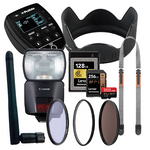
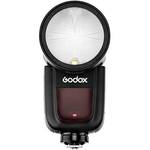
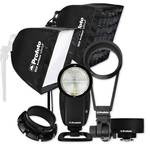
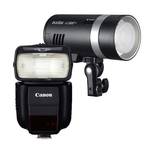
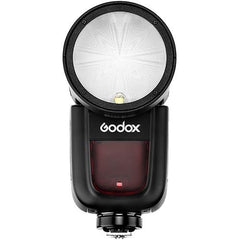
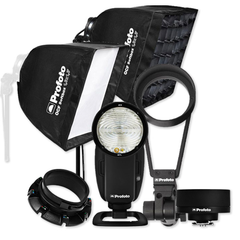
A lot of photographers only reach for flash when things go wrong. It’s way more useful than that. Off-camera flash lets you shape the scene instead of being at the mercy of whatever light happens to be there. You don’t need a complicated setup. One light, a modifier, and a trigger will get you most of the way. For smaller, lightweight setups, a round-head speedlight like the Godox V1 or V1 Pro, or the Profoto A10, is perfect. They’re quick to work with, powerful enough for most situations, and support TTL across all the major camera brands — just make sure you choose the version that matches your camera system.
Place the light just off-axis, around head height or slightly above, and feather it across their faces so it falls off gently. The goal is polish, not “flash photo.” The easiest way to make flash look good is to set your ambient exposure first, then add just a kiss of flash. You’re opening the eyes slightly, adding separation, and giving the scene depth. If you blast your subjects and kill the background, it starts to feel like they’ve been cut out and pasted somewhere else. When you need more power — especially for backlit scenes or shooting into the sun — stepping up to a battery strobe like the Profoto B30 or Profoto A2 gives you that extra punch while still staying portable.
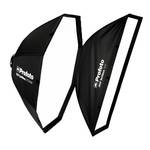
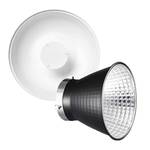
Modifiers matter more than people think. A soft, controlled light instantly elevates the look. Profoto’s Clic system is great for fast setups, and the Clic Octa 2.7’ paired with an A10 is a favourite for couples work. For larger scenes, a 4’ Profoto softbox gives beautiful wrap and is still quick to set up on location. If you want something more universal, a shoot-through umbrella like the Phottix Premio 47” is a solid, great-value option that works with almost any flash system. At dusk, gels are your cheat code. A quarter to half CTO on your key light warms skin tones while the sky stays cooler, and suddenly the scene feels cinematic without much effort.
One final thing — if you’re shooting off-camera, you’ll need the correct transmitter to trigger your flash. Whether you’re using Godox or Profoto, getting the right one for your camera system is essential. If you’re unsure, the team at Georges can point you in the right direction and help you build a setup that actually fits how you shoot.

Tip 5 - The flash paradox: you add light to make things darker
This is the part that makes flash click for people. Flash isn’t only about making a scene brighter. It’s about controlling what the background does. If you want a moodier sky or a cleaner background, underexpose your ambient with shutter speed or ISO, then bring your subjects back up with flash. You end up with crisp subjects and a darker, richer scene behind them. It’s especially useful in harsh daylight when the environment looks flat. You can also “make your own sun.” Put a harder light behind them, slightly above head height, and expose the ambient for the scene. That backlight creates believable shape and separation, like a sun flare you actually control.
And when you’re lighting faces, small movements matter. A hand’s width higher or lower can change the whole story. Closer and higher tends to be softer and more flattering. Lower and farther gives more contour and edge. It doesn’t take much.
If you remember nothing else, remember this: shutter controls ambient, flash power and aperture mostly control your subject, and ISO lifts both. Dial the ambient first, then bring in flash until it feels intentional, not obvious.
Final Thoughts
Great couple photos are mostly psychology and environment, with technique backing it up. Make them feel safe, keep them moving, choose light you can win with, and use flash to shape rather than shout. Do that and you’ll get photos they actually want to live with, not just post once and forget.
– Clyde Vaughan @cvexplores