


-v1665700116905.png?500x500&options=w_150)















Why 2026 Might be the year to change from DSLR to Mirrorless
Alright—let’s do the DSLR vs mirrorless thing properly. Not “on paper”, not “in theory”, but head-to-head on the stuff that actually matters when you’re out shooting.
My name's Oliver Minnett, I'm Georges marketing manager, many of you who read these know that I love photography. Having worked professionally, shooting campaigns for brands like Benefit Cosmetics, Kmart, Tinder, NRMA, and touring as a music photographer. I've had experience with lots of systems, from PhaseOne to Leica, Canon and Sony. My time at Georges has made me less biased towards one brand, having been afforded the opportunity to try everything. When Mirrorless was first introduced back with the Nikon J1's, I didn't think much of it, but as time has evolved. Whilst I still love my SLR's and I have a few, the mirrorless system has made my workflow a tonne more efficient and enjoyable.
Autofocus, image quality, video performance, stabilisation, and the lens ecosystem. The whole point here is simple: the mirrorless jump isn’t a trend anymore. At this point, it’s a legit upgrade in almost every meaningful way.
And that’s not brand hype, either. Canon, Fujifilm, Nikon, Panasonic… everyone’s packing their mirrorless bodies with features that DSLRs just can’t really compete with anymore. So if you’re still on older kit and wondering “should I upgrade to mirrorless?”, this is your sign to at least consider it.
If you LOVE your DSLR like I do, it doesn't mean you have to sell it, or give it away, but if you've always struggled to get shots you love, Mirrorless will make it a lot easier! And if you haven't experienced it for yourself, the newest generate of cameras are incredible!
Mirrorless vs DSLR, in real life
DSLRs are the classic setup: mirror, optical viewfinder, mechanical everything. They’re tough, reliable, and a lot of us learned on them—so there’s a bit of emotional attachment there too. Mirrorless cuts out that whole mirror box system, and it turns out that one change opens the door to a stack of improvements: better autofocus coverage, better video, better stabilisation, faster shooting, smaller bodies… the list goes on.
The short version? The entire industry has moved on. If you’re choosing where to put your money now, mirrorless is where the future (and the best features) are.
Size and weight: the obvious one
Let’s start with the most instantly noticeable difference: mirrorless cameras are lighter and smaller. Cutting out the mirror box reduces bulk without sacrificing sensor size or image quality. You still get the same APS-C or full-frame sensor you’re used to—you just lose the old mechanical “nerve system” that you don’t really need anymore.
A super clear example is the Canon R10 vs Canon 70D. Both are APS-C. One weighs roughly 750g (70D) and the other is about 420g (R10). That’s not a small difference—that’s the difference between “yep, I’ll bring my camera” and “ugh, I’ll leave it at home”.
And the size thing matters more than people think. Smaller body means you can fit more into your bag—extra lens, gimbal, mic, whatever. Or you can just carry less and enjoy the shoot more. Either way, you’re not giving up quality to get that weight reduction. You’re getting the same sensor size… with better performance attached.
Quick takeaway (because it matters):
- Same sensor size, less bulk
- Easier to carry all day (less fatigue, less “do I really want to bring it?”)
- More room in your bag for actual useful gear
I know that if we look at the Canon EOS R5 Mark II and the EOS 5D IV, we're not seeing a huge weight difference between the two cameras. Although when we start looking closer the R5 II has a lower profile; pro bodies have impeccable build quality, which requires magnesium alloy frames and large heat sinks to withstand the demands of professional daily use. However, with the other features listed and the weight savings, there's a lot to it!

Autofocus: this is where mirrorless left DSLRs behind
This is the moment. Autofocus is where mirrorless really pulled away.
DSLRs have a limited number of autofocus points, and they’re usually clustered around the centre. The Canon 5D IV, for example, has 61 AF points. Compare that to a modern mirrorless body like the Canon R5 II with 5,000+ AF points spread across basically the entire sensor. That’s better coverage and better accuracy straight away.
But the real difference is the experience. Mirrorless autofocus isn’t just “a bit better”. It’s the kind of better that you feel immediately. The tap-to-focus speed from background to subject is way faster. Subject tracking is way stickier. And modern systems can identify things DSLRs simply weren’t built to handle—eyes, animals, vehicles… you name it. It finds it, locks on, and hangs on.
It varies a bit brand to brand, sure. But the overall story is the same: mirrorless AF is night and day compared to most DSLRs.
Video performance: cropping, stabilisation, and “jello” footage
If you do any serious video work, DSLRs aren’t even in the conversation anymore. That sounds harsh, but it’s true.
A lot of DSLR 4K is cropped (hello, 5D IV), which means your footage gets tighter and you can’t shoot as wide. And it often ends up looking softer. Mirrorless bodies, on the other hand, are more likely to give you full sensor readout (or at least far less compromise), so you’re getting the absolute most out of the camera.
Then there’s stabilisation. Mirrorless cameras have massively improved IBIS (in-body stabilisation), which is one of those things you don’t appreciate until you’ve had it and then tried to live without it again. For handheld work, run-and-gun, content, weddings—IBIS is a genuine quality-of-life upgrade.
And finally: rolling shutter. That “jello-like” wobble you see when panning quickly or filming fast-moving subjects. DSLRs typically struggle more here thanks to older tech and slower sensor readouts. Mirrorless cameras, with electronic shutters and faster readout speeds, reduce rolling shutter significantly—so action and movement look cleaner.
Core video wins for mirrorless:
- Less (or no) 4K crop = wider, better-looking footage
- Better IBIS = smoother handheld video
- Faster sensor readout = less rolling shutter (“jello”)
Low light: “absolute champions” is accurate
This one catches people out because both camera types can have great sensors… but the gap shows up when you start pushing ISO.
On a DSLR, realistically, you’re not loving life much above ISO 6400. Files get noisy, detail drops, and it can get ugly fast. Modern mirrorless sensors—especially full-frame—handle low light like absolute champions. Cleaner files, better recovery, more usable information in the shadows and highlights.
For events, weddings, concerts, indoor sport, street at night… this stuff matters. Being able to shoot in bad light without your images falling apart is one of those upgrades you only truly appreciate once you’ve got it.
As a music photographer, when I started competing against guys using the A7S II's, the difference between us was night and day, there were shots they could get, that there was no chance I was going to be able to pull off.
Viewfinders: OVF vs EVF (and why EVF wins for most people)
People love to say the DSLR’s optical viewfinder is “better” because there’s no lag and it’s bright. And yes, you’re literally looking at the real scene through a prism. That part is nice.
But here’s why a lot of shooters end up preferring EVFs: you can actually see what your settings are doing. With an electronic viewfinder, you’re seeing what the sensor sees—exposure in real time, white balance changes, focus feedback, overlays, settings… heaps of things you simply can’t do through an optical viewfinder.
Also, if you’re shooting bursts on a DSLR, you get blackout. That split second where the shot gets in the way and you lose the subject. With an EVF, you stay locked in, which makes tracking action feel way more natural. Once you get used to an EVF, going back to optical can genuinely feel slow and cumbersome.
Lenses: the future is mirrorless mounts
Lenses are where the long-term decision really sits. Camera bodies come and go. Lenses stick around for decades.
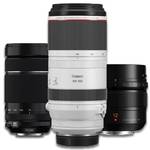
Canon and Nikon (and everyone else) have shifted to new mounts because mirrorless lens design is the future. Mirrorless-native lenses are generally lighter, faster, and sharper, because they’re built specifically for these newer systems and the shorter flange distance.
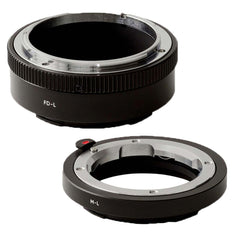
The good news is you’re not forced to throw out your DSLR lenses. Adapters exist, and they work well. So you can transition without nuking your whole kit overnight. But if you’re investing forward, mirrorless mounts are where all the best new glass is going.
Burst shooting: the “you miss less” feature
This is the fun one. With electronic shutters and mirrorless cameras, frame rates are now at levels that are basically impossible on most DSLRs.
A DSLR like the 5D IV shoots around 7 fps. A mirrorless body like the R5 II can hit 40 fps. That’s not a small upgrade—that’s a completely different experience. When you’ve got that many frames, it’s a hell of a lot easier to nail wildlife, sport, kids, anything fast-paced. You simply miss less.
Also worth noting: DSLR buffers fill and slow down pretty quickly, and you feel it. Mirrorless can keep those bursts going longer—as long as your card is fast enough.
So… should you upgrade to mirrorless?
Honestly? For most people, yes. There’s never been a better time. There are so many strong mirrorless options right now at genuinely good prices, and the upgrade you get isn’t just “new toy energy”—it’s real performance.
Here’s the simple breakdown:
- If you shoot video at all, mirrorless is the easy choice.
- If you shoot action/wildlife, the AF tracking + burst speed is massive.
- If you shoot events/low light, the cleaner ISO and EVF preview makes life easier.
- If you just want a camera you’ll actually carry more, the size/weight alone is reason enough.
And if you’ve got older kit sitting around? Bring it in. At Georges, we can trade it in and help you sort a mirrorless setup that fits what you actually shoot—without guessing and without overcomplicating it.
The verdict
Mirrorless cameras are better in almost every way that matters: autofocus, video, speed, versatility. The whole industry has moved on, and if you’re buying into a system now, it makes sense to buy into the one that’s being built for the future.
If you want to dive deeper into any of these topics, check out the rest of our blog guides. And drop a comment while you’re at it—what’s the number one feature that would make you switch to mirrorless?