








5 Things to Know Before You Upgrade Your Camera
|
|
Time to read 13 min





-v1665700116905.png?500x500&options=w_150)



|
|
Time to read 13 min
Every brand tells you they’re the best. Every spec sheet looks impressive. And YouTube has a way of turning camera upgrades into a kind of competitive sport. It’s no surprise so many people feel overwhelmed before they’ve even walked into a store.
Most photographers upgrading their camera aren’t chasing perfection. They’re looking for something that makes shooting easier, more enjoyable, and more reliable in the real world. Something that fits how they actually work, rather than how a review spreadsheet says they should work.
If you’re upgrading to mirrorless (or moving from DSLR to mirrorless), there are five things that actually matter in the real world. Not in a lab. Not on a spreadsheet. In your hands, on a job, on a trip, or at 7pm when the light drops and you still want the shot.
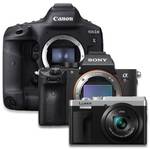
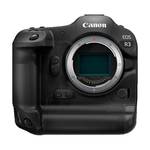
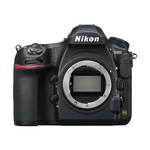
This guide is built to sit alongside our YouTube video, and it’ll help you decide between cameras like:
Let’s make this simple without dumbing it down!
I’ve always thought about sensor size as the window the camera sees through. A full-frame sensor is a bigger window; an APS-C sensor is a smaller one. You can stand in exactly the same place, looking at the same scene, and the smaller window simply sees less of it. That’s the “crop” everyone talks about.
Most APS-C systems are about 1.5× crop This means a 50mm lens on a 1.5× APS-C camera looks like a 75mm-ish field of view.
In practical terms, changing sensor size affects three things you’ll actually notice when you shoot. The first is field of view. Put the same lens on an APS-C camera and it looks more zoomed in than it does on full-frame. The lens hasn’t changed — the camera is just showing you a tighter slice of the scene. This can be a downside for wide shots, but it can also be a genuine advantage for sports, wildlife, or anything where a little extra reach helps.
The second difference is depth of field. Full-frame cameras make shallow depth of field easier at the same framing, which is why people associate them with that soft, blurred background look. APS-C can absolutely produce a beautiful background blur as well, especially with fast lenses, but Full-frame tends to achieve it with less effort.
The third is low-light performance. All else being equal, larger sensors tend to handle low light better. It’s not magic, and it’s not a rule without exceptions — it’s simply physics and sensor design. That said, neither format is “better” in isolation. It always comes back to what you shoot and how you like to work.
Neither. It depends on what you shoot.
If you shoot travel, street, everyday, content, APS-C can be a dream (lighter gear, great reach, often better value).
If you shoot weddings, portraits, and low-light events, a full-frame camera can make life easier.
If you shoot sports and wildlife, APS-C “reach” can be a genuine advantage.
Real examples from this video’s cameras:
APS-C: Fujifilm X-T5, Sony a6700
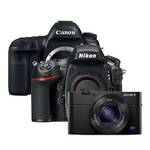
Full frame: Canon R5 II, Sony A9 III, Sony FX3, Nikon Z5 II, Panasonic S5 II
A side-by-side of the full-frame Sony A7 Mark IV with a 24-70mm GM2 and the Sony ZV-E10 with the 15mm 1.8 G lens. It's a startling difference in how much bigger full-frame cameras can be. Lens choices will make a huge difference when it comes to this as well.
There’s a simple truth that doesn’t get enough attention: if a camera is annoying to use, you’ll stop picking it up.
Ergonomics isn’t a nice bonus — it’s the difference between shooting all day without thinking, or constantly being reminded you’re holding a piece of equipment.
When people talk about ergonomics, they often mean grip size, but it goes deeper than that. It’s about whether your fingers naturally land on the controls you use most, whether you can change settings without pulling the camera away from your eye, and whether the menus feel logical rather than frustrating. It’s also about balance. A camera body might feel great on its own, but once you attach the lens you actually plan to use, everything can change.
Specs don’t matter much if the camera never leaves your bag. Comfort, familiarity, and ease of use quietly shape how often you shoot and how long you stay engaged. In that sense, ergonomics isn’t separate from performance — it is performance.
Ergonomics isn’t a “nice to have”. It’s the difference between:
shooting for 8 hours without thinking, or
fighting your own gear all day.
If you can, physically handle cameras before you buy. Check:
Grip depth (can you hold it securely one-handed?)
Button placement (can you change ISO/shutter/aperture without having to jump into a menu?)
Menu logic (does it feel intuitive or like a punishment?) Can I customise it?
EVF/LCD comfort (can you actually see what you’re doing in bright light?)
Balance with your lens (a body might feel great until you put real glass on it)
They buy a body because the specs are “better”… then realise it’s:
heavier than they expected,
awkward with their favourite lens,
a hassle to travel with,
or simply not enjoyable.
If you’re shooting lots (travel, weddings, events, long days), comfort is performance.
A "few" of the lens options from Sony.
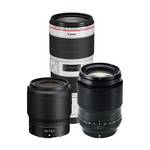
Camera bodies change quickly. Lenses don’t. They last longer, hold their value better, and influence the look of your images far more than the latest sensor update ever will.
For most photographers, a simple lens setup goes a long way. An everyday zoom tends to do the heavy lifting. A fast prime opens up low light and gives you a different way of seeing. A telephoto expands what you can reach, and an ultra-wide changes how you approach space and perspective. Bodies will come and go, but a strong lens lineup grows with you.
Before upgrading, it’s worth thinking beyond the body you’re buying today and considering the system you’re stepping into. Photographers and videographers alike will talk about GAS: That's "gear acquisition syndrome", because it's easy to get excited about the next piece of kit, but you need to weigh up the practicalities and how certain lenses may make your job easier, or give you a unique perspective.
Which brings us to the ever important question:
Not today. Next year. Because the worst upgrade is buying a body… then realising the lenses you actually need are:
not available,
too expensive,
too big,
or not supported the way you hoped.
If you’re building a kit from scratch or upgrading from DSLR:
Start with one great “do everything” lens
Usually a standard zoom. It’s boring. It’s also how you actually get photos.
Here are a few of the great options currently available from all the various brands:
Once you’ve got your main “do everything” lens sorted, the next upgrades are straightforward — and they’re the ones that actually expand what you can shoot, not just what you can brag about on a spec sheet. Think of it like building a kit with purpose: one lens for everyday coverage, then a few deliberate additions that solve real problems (low light, distance, space, and flexibility).
From there, your next lenses usually fall into three categories:
Add a fast prime for low light, portraits, and that “proper” look when you want the background to fall away and the subject to pop.
Add a telephoto for sports, wildlife, events, and compressed portraits where you want that punchy, cinematic perspective from further back.
Add an ultra-wide for landscapes, architecture, interiors, and travel when you need to show the whole environment, not just a slice of it.
Now, this is also where people accidentally buy the wrong thing — because crop vs full-frame lenses isn’t a nerd detail, it’s a compatibility issue that can cost you money if you don’t know what you’re looking at.
Here’s the simple breakdown:
APS-C / crop lenses are designed to cover a smaller sensor area.
Full-frame lenses cover a bigger sensor area.
So what happens when you mix them?
If you put a crop lens on a full-frame body, you’ll often likely get heavy vignetting (dark corners), or the camera will auto-crop to avoid it, which reduces resolution.
If you put a full-frame lens on an APS-C body, it works perfectly fine — you’ll just get the tighter crop field of view, which can actually be a bonus if you shoot sport or wildlife and want extra “reach” without buying a longer lens straight away.
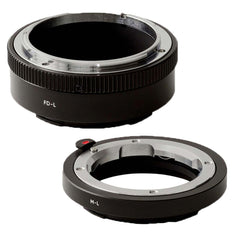
And if you’re moving from DSLR to mirrorless, adapting your old lenses can be a smart bridge while you transition. It's important to note, whilst many DSLR lenses can be adapter, not all adapters were created equally, and you WON'T be able to go from Canon to Nikon, or Nikon to Sony (with autofocus performance), so it's worth testing out the adapters and seeing if your brand choice will allow you to transition! This'll be important if you want to keep using the glass you already own, spread the cost out instead of replacing everything at once, and upgrade lenses intentionally rather than panic-buying a whole new kit overnight. The key is treating adapting as a stepping stone: it’s great for getting you moving quickly, but the smoothest long-term setup usually comes from eventually building into native mirrorless lenses that fully match the system.
The big camera manufacturers take extra care of the "trinity" lens sets, these are there fast F/2.8 zooms built for professional use by photographers, this is the Nikon Z set:
This is the unsexy part that becomes very sexy the first time something fails.
If you shoot casually, you can get away with a lot.
If you shoot paid work, travel, or anything you can’t redo, you want:
predictable power,
reliable cards,
and a workflow that doesn’t come unstuck under pressure.
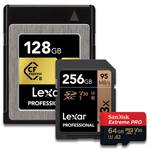
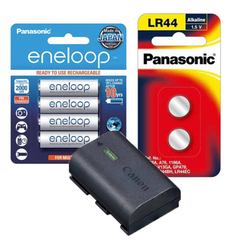
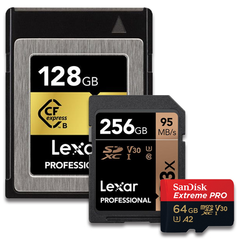
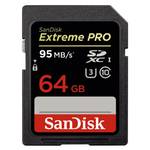
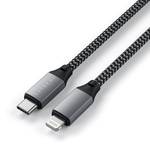
Real-world battery life matters more than headline numbers. USB-C charging and power delivery can quietly change how you work, especially for video or long shooting days. The same goes for memory cards. Faster, more reliable cards cost more, but they’re an insurance policy against the kind of failure you only experience once before learning the lesson.
It’s usually better to own fewer cards and batteries of higher quality than a bag full of cheap spares you don’t trust. There's nothing worst than having your batteries drain really quickly, a card that fails halfway through a shoot, or running out of power and memory options because you haven't taken advantage of USB-C.
Look for:
strong battery life in real use
USB-C charging and/or USB-C power delivery (so you can power from a battery bank on long days)
availability and cost of spare batteries
If you’re upgrading for video, this is huge. A camera that can be reliably powered all day is a different level of tool.
Here’s the simple truth: your memory card isn’t “just storage” — it’s the part that decides whether your camera feels fast and dependable, or whether it chokes the moment you shoot a long burst or hit record on high-quality video. When people say a camera “handles” better or feels more professional, a lot of the time they’re feeling the media pipeline, not the sensor.
CFexpress is essentially SSD technology in a camera card. It runs on PCIe, which is the same kind of high-speed connection used inside computers, and PCIe lanes are just the data highways that move information from your camera to the card. More lanes means more bandwidth, which means the camera can keep writing without hitting a wall. That’s why CFexpress shows up in bodies built for heavy workloads — high bitrate video, fast buffer clearing, and high-speed bursts — while SD is still everywhere because it’s widely compatible and perfectly fine for a lot of photography.
Where people get caught out is with the speed ratings.
You don’t need to memorise the whole alphabet soup, but you do need the basics:
And here’s the “wait, what?” moment that matters: a V90 SD card can cost more than CFexpress at the same capacity because V90 SD is basically the top end of what SD can reliably do, so you’re paying for tighter manufacturing and consistency inside a more limited standard. CFexpress, on the other hand, is built to move serious data all day long, so when you compare dollars to performance, it can actually be the better deal — not because it’s “cheap”, but because you’re getting a lot more speed and headroom for your money.
If you want the rule that saves you from regret, it’s this: buy fewer cards, but buy better cards. The cheapest card is only cheap until it corrupts a clip, drops frames, or turns a paid shoot into a recovery mission.
Two cameras can look identical on paper and still give you a completely different result in the real world. That’s because the image you get isn’t just sensor size, megapixels, and dynamic range — it’s also the way the brand renders colour, what the screen is showing you, how accurate the EVF is, and, honestly, how confident you feel while you’re shooting. If you don’t trust what you’re seeing, you shoot slower, you hesitate more, and you start second-guessing every decision. That’s not a small thing. That’s your entire workflow.
When people say “colour science”, they’re usually talking about the feel of the image straight out of camera. It’s how skin tones land, what greens look like in trees or grass, how blues render in the sky or ocean, and whether the image leans warm and inviting or neutral and clinical. None of this is right or wrong — it’s taste — but taste matters because it affects how quickly you get to an image you actually like. Some people fall in love with a brand because the files already look close to their ideal without much effort, and that’s a legitimate reason to choose a system, especially if you’re shooting a lot and you don’t want to spend your life “fixing” colour in post.
It also changes your behaviour. If you like what you’re seeing, you shoot more. You experiment. You take risks. If you constantly fight the colour, you end up editing more than you need to, and you can start resenting the process. And if you don’t trust the screen, you’ll second-guess exposure and focus all day long — which is where mistakes creep in, because you’re no longer shooting with momentum, you’re shooting with anxiety.
That’s why screens and EVFs are the underrated dealbreaker, and it’s why you shouldn’t skip this part when you’re choosing a camera. In-store, actually check how bright the LCD is outdoors, how responsive the touchscreen feels, whether the EVF looks clear and smooth (especially when you pan quickly), and how easy it is to zoom in and confirm focus or check your highlights. If you shoot in bright Aussie sun, a dim screen can turn a great camera into an annoying one fast, because you’re constantly guessing instead of seeing. And the more you guess, the less you enjoy shooting — which defeats the whole point of upgrading in the first place.
What you shouldn’t skip when buying a camera:
Editing: (are the files easy to edit, do they render skin tones nicely, is the camera's white balance accurate or do you have to fight with it)
LCD brightness outdoors (can you actually see exposure and colour in daylight?)
Touchscreen responsiveness (does it feel immediate or laggy and frustrating?)
EVF clarity and refresh feel (is it sharp and smooth when you pan or track movement?)
Ease of checking focus and exposure (how quickly can you zoom in, review highlights, and confirm you nailed it?)
Before you spend a cent, do this:
Write down what you shoot most (not what you wish you shot)
List your pain points (low light, autofocus, video quality, weight, lens options)
Pick the system based on lenses first
Choose the body that fits your hands and workflow
Budget for media, batteries, and at least one great lens
Most “bad upgrades” are people buying a body and hoping it magically fixes everything.
Good upgrades are intentional. And if you're still struggling, you can reach out to us online, or come in store, and we'll help you out!


