






















Laowa Nanomorph 50mm T2.4 1.5X S35 (Silver) - (Cine) Nikon Z


Availability
- Availability: Awaiting stock
This item is currently on backorder. To secure your allocation from the next shipment, please place a pre-order. Contact us for estimated arrival.
- Delivery: Awaiting stock
This item is currently on backorder. To secure your allocation from the next shipment, please place a pre-order. Contact us for estimated arrival.


Price Match
Fill out the price match form below, and we will be in touch shortly.

Price Match
Fill out the price match form below, and we will be in touch shortly.
 If you'd like to know when it's due, we're here to help!
 Call us during business hours at 02 9299 0177.
 Chat live with our team on-site.
 Or email us anytime at info@georges.com.au with the subject "Awaiting Arrival"
Recommended accessories
View all
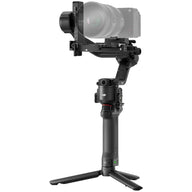
$947.00$999.00
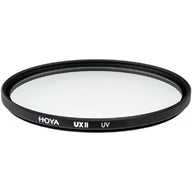
$50.00
$40.84$42.99
Product Overview
This Laowa Nanomorph 50mm T2.4 1.5x S35 Anamorphic Lens from Venus Optics is a slender, compact anamorphic lens that captures high-definition video with 1.5x anamorphic squeeze on cameras with S35 sensors. It features a focal length of 50mm, a Nikon Z lens mount, an aperture range of T2.4 to T22 for a deep depth of field, and 13 iris blades for a shallow depth of field and soft bokeh.
What's in the box:
Venus Optics Laowa Nanomorph 50mm T2.4 1.5x S35 Anamorphic Lens (Nikon Z, Silver Flare)
Front Cap
Rear Cap
Shim Set
Allen Wrench (0.9mm)

Need advice?
Speak to one of our dedicated Australian-based sales team members.
Key Features


FAQs
What advantages does the 1.5x anamorphic squeeze ratio provide for filmmakers?
How does the silver flare of the Laowa Nanomorph lens differ from traditional blue flares?
What types of projects are best suited for the Laowa Nanomorph lens?
Can the lens be used for still photography, or is it strictly for video?
How does the unified gear position benefit cinematographers during shoots?
What is the significance of the 27.5-inch minimum focus distance?
Product Reviews
Recommended Accessories


Blog posts
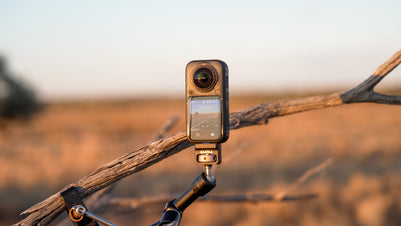
Insta360 X6 Review: 500 km Across the Simpson Desert
We put the Insta360 X6 to the ultimate test across 500 km of the Simpson Desert! From stunning low-light footage and 8K 360° video to replaceable lenses and wireless audio, discover how...
View post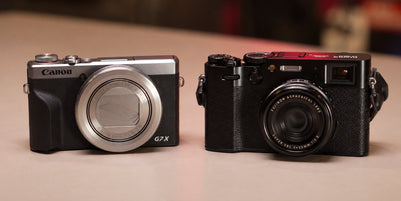
Canon G7 X Mark III vs Fujifilm X100VI: Which Should You Buy?
Compare the Canon PowerShot G7 X Mark III vs Fujifilm X100VI in our real-world camera comparison. Discover the differences in image quality, low-light performance, colour, video features, zoom, and price to find...
View post
Tamron 16-50mm F2.8 vs Sigma 18-50mm F2.8: Which Compact APS-...
If you shoot on an APS-C mirrorless camera and want one lens that stays on the body most of the time, there's a good chance the Sigma 18-50mm F2.8 DC DN Contemporary...
View post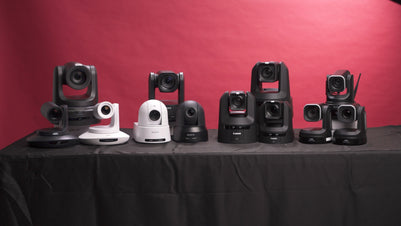
The Ultimate Guide to PTZ Cameras: Choosing the Right Setup f...
Compare Canon, Sony, BirdDog and Telycam PTZ cameras on image quality, tracking, zoom and value. Find the right setup for your production at Georges Cameras.
View post
Beauty Lighting: How to Combine Hard and Soft Light to Make S...
A working beauty photographer’s guide to combining hard and soft light, beauty dish vs softbox, grids, negative fill and a clamshell setup you can copy, for skin that pops.
View post
Everyone Can Take a Picture. Not Everyone Can Hold the Room
What an agent, a Vogue visuals producer and a brand-side creative lead really look for in photographers now. There is a point in almost every creative career where the work alone stops...
View post
Beyond Reach: My Experience With the Fujifilm XF400mmF4.5 Sup...
Explore our hands-on experience with the Fujifilm XF400mmF4.5, covering its sharpness, autofocus, reach and performance for sport, wildlife, landscapes and portraits.
View post
Learn to Get the Shot Right In-Camera
Beauty photography tips from Oliver Minnett’s Georges workshop, covering lighting, direction, working with a creative team, and using Sony and Profoto gear.
View post
Stop Trying to Learn Everything at Once
Beauty photography tips from Oliver Minnett’s Georges workshop, covering lighting, direction, working with a creative team, and using Sony and Profoto gear.
View post
Beauty Photography Tips: Three Things I Wish I Knew Earlier
Beauty photography tips from Oliver Minnett’s Georges workshop, covering lighting, direction, working with a creative team, and using Sony and Profoto gear.
View post