Transfer Speeds and Why They Matter
Transfer speed affects how quickly you can move files from your card to your computer. For casual shooting, this may not seem like a major issue. But for professional photographers and videographers handling hundreds of RAW files or long video clips, slow transfers can quickly become a bottleneck.
A faster CF express card reader can help you:
- Ingest files more quickly after a shoot
- Reduce downtime between capture and editing
- Back up footage more efficiently
- Work more smoothly with large video files
- Keep production days and delivery timelines moving
It’s also important to remember that transfer speed depends on the full chain: the card, reader, cable, computer port and storage drive all play a role. A fast reader works best when paired with compatible USB ports and high-performance storage.
Understanding USB Standards
Many CFexpress card readers use USB standards such as USB 3.2 to support fast file transfer. The USB version can affect the maximum transfer speed available, but your computer must also support the same standard to take full advantage of it.
For example, the Lexar Professional CFexpress Type B USB 3.2 Gen 2x2 Reader is designed for creators who want fast transfers from CFexpress Type B cards. To get the best possible performance, it should be used with compatible USB 3.2 Gen 2x2 hardware.
If you’re comparing readers, look at the connection type, included cable, supported card format and your computer’s available ports. A faster reader is only as effective as the system it connects to.
Type A vs Type B CFexpress Readers
CFexpress cards come in different physical formats, and the two most common are Type A and Type B. They are not interchangeable, so choosing the right reader is essential.
CFexpress Type A Readers
CFexpress Type A cards are smaller and are commonly used in selected camera systems. If your camera uses Type A media, you need a reader specifically designed for Type A cards.
The Wise CFexpress Type A / SD UHS-II Card Reader is a practical option for creators who need to work with both CFexpress Type A and SD cards in one compact workflow.
CFexpress Type B Readers
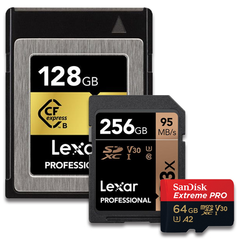
CFexpress Type B cards are larger and commonly used across many professional cameras. They are popular with photographers and filmmakers working with high-resolution stills, high-bitrate video and demanding production formats.
The Wise CFexpress Type B / SD UHS-II Card Reader is a useful option for creators who want a combined CFexpress Type B and SD card reader, while the Lexar Professional CFexpress Type B USB 3.2 Gen 2x2 Reader is a dedicated Type B reader designed for faster professional transfer workflows.
Dual-Slot Readers for Hybrid Shooters
Many photographers and videographers use more than one card type. You may shoot CFexpress in one camera and SD in another, or use a camera body with mixed card slots. A dual-slot reader helps simplify the process by letting you handle multiple formats with one device.
The ProGrade CFexpress Type B and SDXC UHS-II Dual-Slot Card Reader USB 3.2 Gen 2 is designed for creators who need a fast, efficient reader for professional photo and video workflows.
Dual-slot readers are especially useful for:
- Hybrid camera users
- Wedding and event photographers
- Production teams managing multiple camera bodies
- Creators using both CFexpress and SD cards
- Faster backup and ingest workflows
- Travel and location shoots where less gear is better
Instead of carrying multiple readers, a dual-slot option can keep your kit cleaner and your workflow more organised.
Card Reader and Storage Solutions
For creators who travel or shoot on location, organisation matters just as much as speed. A reader that also helps protect and store cards can be useful when you’re moving between shoots, locations or edit setups.
The PGYTECH CreateMate CFexpress Type B / SD Card Reader Case combines card reading with card storage, making it a practical choice for photographers and filmmakers who want to keep their media protected and easy to access.
This type of setup is especially helpful when working outdoors, travelling, filming events or managing multiple cards across a production day.
Choosing the Right CFexpress Card Reader
The best CFexpress reader depends on your camera, card type, computer and workflow.
Before choosing, consider:
Card format
Check whether your camera uses CFexpress Type A or Type B. The reader must match your card type.
Transfer speed
If you regularly work with large RAW files or video footage, choose a reader with faster transfer capability and modern USB support.
USB compatibility
Check your computer’s ports and USB standards. A high-speed reader works best when your computer and storage drive can keep up.
Single-slot or dual-slot design
Choose a single-format reader if you only use one card type. Choose a dual-slot reader if you work with CFexpress and SD cards.
Portability
For location work and travel, compact readers or reader cases can help reduce bulk.
Workflow efficiency
Think about how quickly you need to back up, edit and deliver files. The right reader can save meaningful time across every shoot.
If you’re unsure which reader suits your setup, the George’s Cameras team can help you compare Type A, Type B and dual-slot options based on your camera and computer workflow.
Explore CFexpress Card Readers at George’s Cameras
A fast camera deserves a fast, reliable file transfer setup. Explore CFexpress card reader options at George’s Cameras, including Type A readers, Type B readers, dual-slot readers and card reader cases for professional photo and video workflows.
Shop online or visit us in Sydney for friendly, practical advice from a team that understands cameras, storage and the details that keep creative work moving.


-v1665700116905.png?500x500&options=w_150)