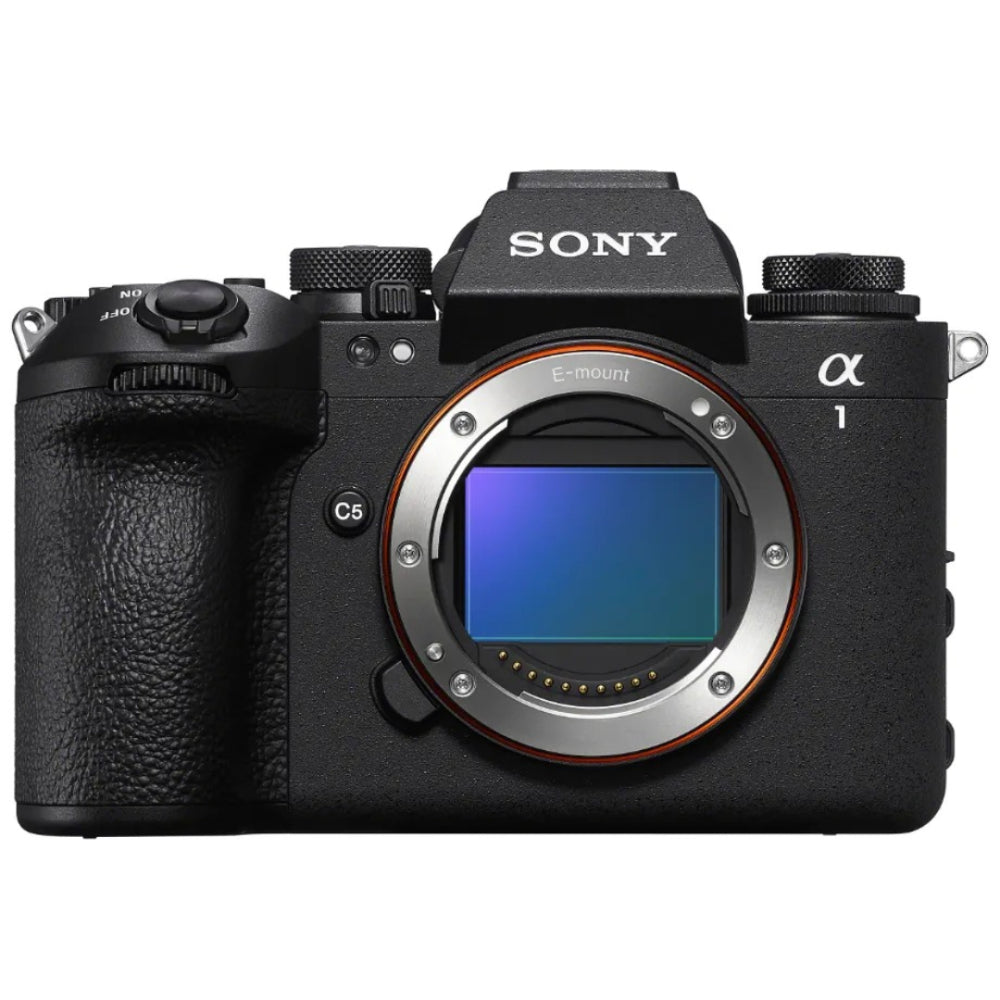
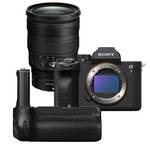
Designed for professionals who demand flagship speed and premium image quality, this kit pairs the A1 II with Sony's FE 24-70mm F2.8 GM II. The A1 II delivers a 50.1MP stacked sensor, AI-powered subject tracking, 30fps continuous shooting and 8K/30p video. The 24-70mm GM II offers a constant F2.8 aperture for low-light work and beautiful background blur, with four XD linear motors for fast, quiet autofocus and G Master optics for edge-to-edge sharpness. At around 695g, it's a premium kit for high-end weddings, commercial and editorial work.
The original a1 was already known for its strong imaging performance and the a1 II improves on this with upgraded BIONZ XR processing, an AI processing unit, more powerful 8.5-stop IBIS, and the impressive 50MP stacked BSI CMOS sensor from its predecessor. The sensor and processor still afford a top 30-fps shooting rate, expandable sensitivity from ISO 50-102400, and an impressive 15-stop dynamic range. Additionally, on the speed front, the a1 II gains the Pre-Capture and Speed Boost functions that debuted on the a9 III.
Sensor and Processing Improvements
Up to 30 fps continuous shooting with an electronic shutter, or 10 fps with the mechanical shutter, with AF and AE supported.
Pre-Capture Shooting records at up to 30 fps for up to 1 second prior to fully pressing the shutter, helping to ensure you don't miss fleeting moments.
Speed Boost lets you vary your continuous shooting speed mid-burst; when the C5 button is depressed while burst shooting, you can switch from the chosen continuous shooting speed to a faster or slower one to suit the pace of action you're photographing.
Refined 5-axis in-body image stabilisation compensates for up to 8.5 stops of camera shake at the centre of the frame and 7 stops at the periphery; an improvement of 3 stops of shake control compared to the original a1.
Same full-frame 50MP stacked BSI CMOS sensor as the a1, mixing high resolution with the speed and reduced rolling shutter of a stacked design to suit both meticulous and quick-working shooters.
Smarter, Faster Autofocus and Subject Tracking
The a1 II's focusing system received similarly significant upgrades from its predecessor, now sporting an AI Processing Unit and refined subject detection and tracking. The phase-detection AF system itself still comprises 759 points, which cover about 92% of the sensor area, and support focusing down to -4 EV at f/2. Subject tracking and subject detection is improved, too, specifically how the camera is 30% faster at detect human eyes and 50% faster with animal eyes.
First seen in the a7R V and a9 III, the a1 II sports a dedicated AI Processing Unit for refined, responsive, and intelligent subject tracking and detection of humans, animals, birds, insects, cars, trains, and airplanes.
Human pose estimation tracks body and head positions for accurate focus in portraiture and sports settings and Real-time Eye AF performance has been improved by 30%.
Additionally, human pose estimation can distinguish between multiple people and maintain focus on the targeted subject; even if someone crosses in front, the camera maintains focus on the key person.
Real-time Tracking benefits from AI-based subject recognition for following moving subjects, making it particularly well-suited to sports and action subjects.
Auto Subject Recognition modes no longer necessitate selecting a subject type, letting the camera detect and track the intended subject.
XS and XL focus area spot sizes have been added for more versatility or you can customise AF focus areas to suit uniquely sized or shaped subjects.
Full-time DMF (Direct Manual Focus) enables using the lens's focus ring for manual focus control at any time, making it easier to switch focus to a different subject even when working with AF.
Alpha's Video Capabilities
The core video specs of the original a1 were ahead of their time, and in many ways, still are. The a1 II keeps many of the core resolutions and frame rates but refines the video recording capabilities with more supportive modes and features, including access to Dynamic Area Stabilisation and timecode input with an optional adapter. This makes the a1 II just as capable on a professional film set as it is in a photography studio.
Familiar recording formats: 8K 30p with 10-bit 4:2:0 sampling and 4K 120p with 10-bit 4:2:2 sampling. When using a Super 35 recording area, 4K footage can use 5.8K oversampling for improved detail and the full-frame area offers 8.6K oversampling for the 8K footage.
AI subject recognition, gained from the AI Processing Unit, benefits the Framing Stabiliser mode, which can be used to automatically crop and recompose so the subject remains centreed in the image.
Dynamic Active Mode Stabilisation also helps retain accurate framing while filming, especially when recording while walking or moving.
Included S-Cinetone profile, ProRes RAW output over HDMI, and the ability to import LUTs all point to the great amount of colour control the a1 II offers.
Support for Breathing Compensation mode, which reduces the effects of focus breathing when using select lenses.
Pre-Capture & Speed Boost-Never Miss a Moment
Along with the key technology delivered by the sensor, the a1 II brings additional features to unlock the camera's full potential.
Pre-Capture: The a1 II can be configured to begin recording images to the buffer when the shutter button is half-pressed. Users can set this between 0.03-1.0 second. Upon pressing the shutter these images will be saved to the memory card.
Speed Boost: With Speed Boost and the C5 button, which is conveniently placed near the grip on the front of the camera, users can instantly switch their camera from their usual continuous shooting frame rate to a faster one to make sure their next shot is just right. Photographers will be able to select various frame rates up to 30 fps.
Professional Body Design and Connectivity
The a1-series has always been a top-of-the-line model for Sony and, as such, had one of the most durable and refined physical designs within the system. The a1 II, though, gains a bit of an upgrade to bring it in line with the a9 III in terms of button layout, screen and EVF implementation, and durability. It's a camera built for professional use and has the strongest, most reliable design in Sony's lineup.
Versatile and Durable Design
The a1 II gains the latest Sony mirrorless body design first seen on the a9 III which includes a C5 custom button on the front of camera body and an enhanced grip.
For transferring, an upgraded 2.5GBASE-T wired LAN port offers faster transfer speeds to suit high-profile tethered shooting applications. There is also a USB-C port and a full-size HDMI port.
USB-C port offers fast USB 3.2 Gen 2 speeds of up to 10 Gb/s.
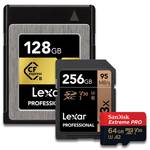
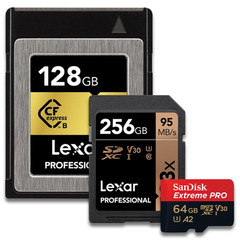
Dual memory card slots both accept either CFexpress Type A or SD-type memory cards. The dual slot design allows for flexible file saving and handling and can be configured to partition file types or can be used for overflow recording. Additionally, both of the card slots are rated to support UHS-II memory cards for faster transfer speeds.
Tru-Finder EVF and Tilting Touchscreen LCD
An impressive QXGA OLED Tru-Finder EVF features a high 9.44m-dot resolution and 0.9x magnification for exceptionally bright, clear, and detailed eye-level viewing. There is also a 120-fps option that maintains the higher resolution for a better mixture of clarity and motion fluidity.
3.2" 2.1m-dot 4-axis multi-angle touchscreen LCD-first seen on the a7R V. This screen has a wide colour gamut covering the DCI-P3 space.
Intuitive menu structure that complements having different workflows with different settings selections for movie recording and stills shooting. The menu system also works in conjunction with the touchscreen design of the rear LCD.
Sony FE 24-70mm F2.8 GM II Lens
A refined take on the fast standard zoom, the Sony FE 24-70mm f/2.8 GM II is not only smaller and lighter than the previous generation, it also features a variety of optical, focusing, and handling upgrades, catering to both photo and video applications, that make this the most well-rounded G Master zoom to date.
G Master Image Quality
Designed to rival the primes, this zoom's optics have been revamped to provide even greater resolution, clarity, and bokeh quality.
Bright f/2.8 constant aperture allows users to capture images in dim lighting conditions and with a shallow depth of field.
Two ED (extra-low dispersion) and two Super ED elements effectively suppress chromatic aberrations and colour fringing for greater clarity and colour fidelity.
Five aspherical elements, including two extreme aspherical elements (XA), minimise spherical aberrations, distortion, and also reduce 'onion ring' bokeh.
Nano AR Coating II controls flare and ghosting with support from a new optical design that reduces internal reflections.
An 11-blade aperture diaphragm helps create smooth, circular bokeh at all aperture settings.
Faster AF and Floating Focus Mechanism
Faster focusing performance, improved close-up shooting, and enhanced control are all benefits of the redesigned focusing system.
Four XD (extreme dynamic) Linear Motors contribute to greatly improved focusing performance, compared to the DDSSM system of the predecessor, including faster, quieter, and more precise AF that's ideal for both photo and stills.
Faster AF means improved focusing when working with fast-moving subjects; support is available for shooting at up to 30 fps, full AF is maintained even when shooting stopped down, and focus tracking is possible even when changing the zoom position.
Floating focusing mechanism helps maintain image quality throughout the focusing range, which is especially important considering the impressive close-up performance of this lens: minimum focusing distance of 8.3" at the 24mm position or 11.8" at the 70mm position and a maximum magnification of 0.32x at the 70mm position.
Internal focusing design promotes snappier, more responsive focusing performance and also maintains the overall lens length during operation.
Improved Control and Video Capabilities
Just as camera design has grown to appeal to both photo and video shooters, this lens has also been updated with a series and attributes that specifically appeal to video shooters' needs.
Focus breathing, focus shift, and axial shift during zooming have all been minimised to prevent unwanted movements and angle of view variations for greater compositional accuracy during recording.
Supports the Breathing Compensation function in select cine-line and Alpha cameras.
The XD Linear Motors are also especially quiet to better enable the use of AF during video recording.
Linear Response MF provides natural, intuitive manual focus control.
Manual aperture ring can be de-clicked for silent operation and the zoom smoothness can be adjusted depending on the desired torque.
Compact, Lightweight, and Robust Design
Among the smallest and lightest f/2.8 standard zooms available, this lens doesn't lose sight of its professional attributes and also remains a weather-sealed, durable lens for use in trying working conditions.
Approximately 22% lighter and 18% smaller than its predecessor, this zoom is a highly portable and versatile option for a huge variety of shooting applications.
Now fit with a manual aperture ring, tactile exposure control is possible. This ring can be de-clicked for smooth and silent iris pulls or it can be locked in the 'A' position for camera-based aperture switching.
Two programmable focus hold buttons and a focus mode switch for intuitive focus control.
Zoom smoothness switch for changing between Smooth and Tight zoom ring torque.
Hybrid construction uses both metal and plastic components to maximise both durability and a low weight design.
Dust- and moisture-resistant design includes rubber gaskets at each seam and a rubber ring sealing the lens mount for ensured use when working in inclement weather conditions.
Front lens element has a fluorine coating that repels water, oil, and other contaminants and makes the lens easier to clean.
Specifications
Camera: Sony A1 II
| Sensor |
50.1MP full-frame stacked Exmor RS CMOS |
| Processor |
BIONZ XR with AI processing unit |
| ISO range |
100–32,000 (expandable 50–102,400) |
| Continuous shooting |
Up to 30fps blackout-free (electronic), 10fps (mechanical) |
| Video |
8K 30p 10-bit; 4K up to 120p 10-bit 4:2:2 |
| Dynamic range |
15+ stops |
| In-body stabilisation |
5-axis, up to 8.5 stops |
| Autofocus |
759-point phase detection with AI subject recognition |
| Viewfinder |
9.44M-dot OLED EVF |
| Screen |
3.2" 4-axis multi-angle touchscreen |
| Card slots |
Dual CFexpress Type A / SD UHS-II |
| Battery |
NP-FZ100 |
| Weight |
658g (body only); 743g with battery and card |
| Dimensions (W x H x D) |
136.1 x 96.9 x 82.9mm |
Lens: Sony FE 24-70mm F2.8 GM II
| Format / mount |
Full-frame, Sony E-mount |
| Focal length |
24–70mm |
| Aperture |
F2.8 constant (min. F22) |
| Optical design |
G Master, incl. XA (extreme aspherical) and ED elements |
| Image stabilisation |
None (relies on in-body stabilisation) |
| Autofocus |
4 XD linear motors |
| Minimum focus |
0.21m (wide) / 0.30m (tele) |
| Aperture blades |
11 (circular) |
| Filter size |
82mm |
| Controls |
Aperture ring with click switch, focus hold buttons |
| Weather sealing |
Dust and moisture resistant |
| Weight |
695g |
| Dimensions (Dia. x L) |
87.8 x 119.9mm |
Key Features:
50MP Full-Frame Stacked BSI CMOS Sensor
AI Tracking & Human Pose Estimation
8K 30p and 4K 120p Video in 10-Bit
Up to 30 fps Shooting with AF/AE
Pre-Capture & Speed Boost Button
8.5-Stop IBIS + Dynamic Stabilisation
9.44m-Dot EVF with 240 fps Refresh Rate
3.2" 2.1m-Dot 4-Axis Touchscreen LCD
5 GHz MIMO Wi-Fi, 2.5GBASE-T Ethernet
Dual CFexpress Type A/SD Card Slots
Full-Frame | f/2.8 to f/22
Fast Standard Zoom
22% Lighter, 18% Smaller than Previous
Four XD Linear AF Motors, Floating Focus
Aperture De-Click and Lock Switches
Zoom Smoothness Switch
XA and Super ED Elements
Nano AR Coating II and Fluorine Coating
Dust and Moisture-Resistant Construction
Rounded 11-Blade Diaphragm
What's in the Box:
Sony A1 II Mirrorless Camera Body
Sony NP-FZ100 Battery (2280mAh)
Sony BC-ZD1 Dual-Battery Charger for NP-FZ100 Batteries
Sony ALC-B1EM Body Cap for E-Mount Cameras
Sony FDA-EP19 Eyepiece Cup
Sony FDA-EP21 Deep Eyepiece Cup
Sony Multi Interface Shoe Cap
Sony Cable Protector
Sony Shoulder Strap
Sony FE 24-70mm F2.8 GM II Lens
Sony ALC-F82S 82mm Front Lens Cap
Sony ALC-R1EM Rear Lens Cap
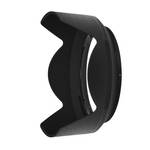
Sony ALC-SH168 Lens Hood
Sony Lens Case







































 If you'd like to know when it's due, we're here to help!
 Call us during business hours at
 Chat live with our team on-site.
 Or email us anytime at info@georges.com.au with the subject "Awaiting Arrival"