



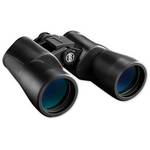












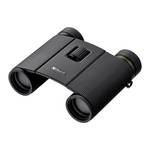
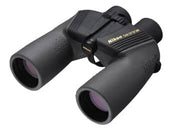
Nikon Marine 7x50 CF WP Binoculars


Availability
- Availability: In-Stock at Warehouse (4 - 8 days)
Available to order, ready to pick up in-store within 4 - 8 days.
- Standard insured: $9.90 (4 - 8 days)


Price Match
Fill out the price match form below, and we will be in touch shortly.
Price Match
Fill out the price match form below, and we will be in touch shortly.
Recommended accessories
View all
$651.07$834.95
$89.73$129.00
Product Overview
- Central focusing system; waterproof (up to 1m/3.3 ft. for 5 minutes) and fog-free with O-ring seals and nitrogen gas
- High-eyepoint design for a clear field of view even for wearers of eyeglasses
- Multilayer-coated lenses for a bright image
- Rubber armouring for shock resistance and a firm, comfortable grip
- Floating strap provided
- Can be fixed to a tripod using optional tripod adaptor
What's in the box:
Nikon 7x50 OceanPro Binoculars
Carrying Case
Floating Neck Strap
1-Piece Ocular Rainguard
2 x Objective Lens Cap

Need advice?
Speak to one of our dedicated Australian-based sales team members.
FAQs
What makes the Nikon Marine 7x50 CF WP Binoculars suitable for marine use?
How does the high-eyepoint design benefit eyeglass wearers?
What is the significance of multilayer-coated lenses in these binoculars?
Can the Nikon Marine 7x50 CF WP Binoculars be used with a tripod, and why would this be beneficial?
What is the purpose of the floating strap included with the binoculars?
What should I consider for optimal performance when using these binoculars in low light conditions?
What is the significance of the binoculars' field of view, and how does it benefit users?
Product Reviews
Recommended Accessories


Blog posts

DJI Osmo Pocket 4P vs Insta360 Luna Ultra: Which Gimbal Camer...
We put the Insta360 X6 to the ultimate test across 500 km of the Simpson Desert! From stunning low-light footage and 8K 360° video to replaceable lenses and wireless audio, discover how...
View post
Sigma 28-45mm T2 FF AF Cine Review: Cinema Glass That Focuses...
The Sigma AF Cine 28-45mm T2 FF combines the optical performance of Sigma’s popular Art series with professional cinema features and reliable autofocus. In this hands-on review, Laz puts the lens through...
View post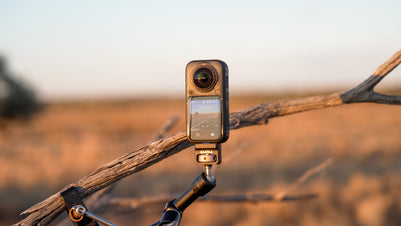
Insta360 X6 Review: 500 km Across the Simpson Desert
We put the Insta360 X6 to the ultimate test across 500 km of the Simpson Desert! From stunning low-light footage and 8K 360° video to replaceable lenses and wireless audio, discover how...
View post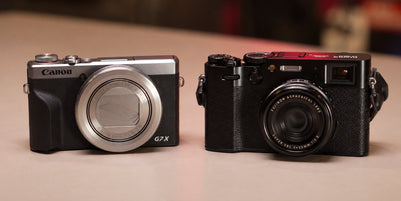
Canon G7 X Mark III vs Fujifilm X100VI: Which Should You Buy?
Compare the Canon PowerShot G7 X Mark III vs Fujifilm X100VI in our real-world camera comparison. Discover the differences in image quality, low-light performance, colour, video features, zoom, and price to find...
View post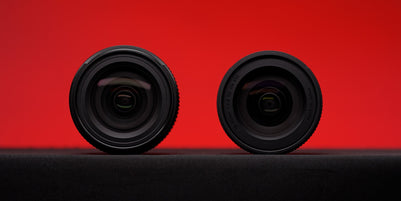
Tamron 16-50mm F2.8 vs Sigma 18-50mm F2.8: Which Compact APS-...
If you shoot on an APS-C mirrorless camera and want one lens that stays on the body most of the time, there's a good chance the Sigma 18-50mm F2.8 DC DN Contemporary...
View post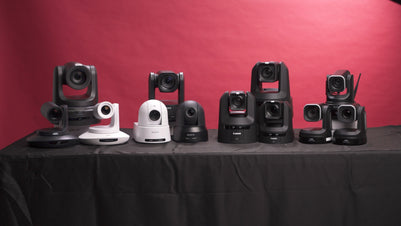
The Ultimate Guide to PTZ Cameras: Choosing the Right Setup f...
Compare Canon, Sony, BirdDog and Telycam PTZ cameras on image quality, tracking, zoom and value. Find the right setup for your production at Georges Cameras.
View post
Beauty Lighting: How to Combine Hard and Soft Light to Make S...
A working beauty photographer’s guide to combining hard and soft light, beauty dish vs softbox, grids, negative fill and a clamshell setup you can copy, for skin that pops.
View post
Everyone Can Take a Picture. Not Everyone Can Hold the Room
What an agent, a Vogue visuals producer and a brand-side creative lead really look for in photographers now. There is a point in almost every creative career where the work alone stops...
View post
Beyond Reach: My Experience With the Fujifilm XF400mmF4.5 Sup...
Explore our hands-on experience with the Fujifilm XF400mmF4.5, covering its sharpness, autofocus, reach and performance for sport, wildlife, landscapes and portraits.
View post
Learn to Get the Shot Right In-Camera
Beauty photography tips from Oliver Minnett’s Georges workshop, covering lighting, direction, working with a creative team, and using Sony and Profoto gear.
View post