Polarising Filters for Richer Colour, Clearer Detail and Better Outdoor Photography

136 products

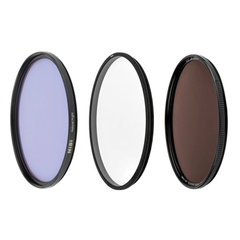
A quality polarising filter is one of the most useful accessories you can add to your camera bag. Whether you’re shooting landscapes, architecture, travel, water, cars or bright outdoor scenes, a polariser helps reduce reflections, deepen blue skies and bring out richer colour straight from camera.

Stay in the know

Beauty Photo of Sienna Etches

Beauty Lighting: How to Combine Hard and Soft Light to Make S...

A working beauty photographer’s guide to combining hard and soft light, beauty dish vs softbox, grids, negative fill and a clamshell setup you can copy, for skin that pops.

View post
Panel Discussion at Lunar Studios

Everyone Can Take a Picture. Not Everyone Can Hold the Room

What an agent, a Vogue visuals producer and a brand-side creative lead really look for in photographers now. There is a point in almost every creative career where the work alone stops...

View post
Beauty Photography Tips: Three Things I Wish I Knew Earlier

Beauty Photography Tips: Three Things I Wish I Knew Earlier

Beauty photography tips from Oliver Minnett’s Georges workshop, covering lighting, direction, working with a creative team, and using Sony and Profoto gear.

View post
Models on stage at Karla Spetics show

How We Lit Karla Spetic's Australian Fashion Week Show with P...

We were invited by Karla Spetic to help light her runway, we chose Profoto's new LED lights for the job!

View post
Ricardo sits with Ollie and discusses mobile podcasting setups

Sony A7R VI First Thoughts: A Portrait Photographer’s Take on...

Sony has just launched the new Sony A7R VI, the latest camera in its high-resolution Alpha line, and I was lucky enough to spend some time with it earlier this week. I...

View post
Ricardo sits with Ollie and discusses mobile podcasting setups

Mobile Podcasting Setups Explained: From First Rig to Full Pr...

Mobile podcasting isn’t about shortcuts. It’s about picking gear that actually works, in the places podcasts actually happen. I used to chase the “best” setup. Turns out, the best setup is the...

View post
Tilta Sony FX Rigging

Rigging Up Your Sony Cinema Camera

Rigging gets a bad rap because a lot of rigs are built backwards. People buy parts first, bolt everything on, and end up with a camera that looks serious but shoots worse....

View post
Gracaie Stendl Portfolio Images

What Makes a Good Photographer? A Portfolio Deconstruction

Clyde Vaughan Guest post by Clyde Vaughan — ahead of  Clyde's talk on January 22: “How to create incredible images: A talk by Clyde Vaughan”. If you ask “what makes a good...

View post
Ollie Jones holds the 22 kg DJI Power 2000

The End of the Generator? Hands-on with the DJI Power 2000

We’ve all been there: you’re on a remote shoot, beautiful location, but you’re either scrambling to find a power outlet or lugging a massive, noisy petrol generator through the bush. We’ve been...

View post
Oliver Minnett teaching a photography workshop

Why 2026 Might be the year to change from DSLR to Mirrorless

Alright—let’s do the DSLR vs mirrorless thing properly. Not “on paper”, not “in theory”, but head-to-head on the stuff that actually matters when you’re out shooting. My name's Oliver Minnett, I'm Georges...

View post

Introduction to Polariser Filters

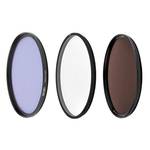
A polariser filter is a lens filter designed to manage reflected light. It works by reducing certain light waves that bounce off non-metallic surfaces such as water, glass, foliage, roads and painted surfaces.

For photographers, this can make a big difference. A good CPL filter can help cut glare from water, reduce reflections on windows, improve contrast in the sky and make colours appear cleaner and more saturated.

Polarising filters are especially popular for landscape and outdoor photography, but they’re useful in many other creative situations too. If you’ve ever taken a photo of a lake, car, shopfront, wet street or bright sky and wished the image looked clearer and more vibrant, a polariser may be the missing piece.

Shop By Brand

Featured Brands

George’s Cameras stocks polarising filters from a range of respected filter brands, giving photographers options for different lenses, budgets and shooting styles.

NiSi

NiSi is a trusted name among landscape, travel and outdoor photographers. Known for high-quality optical glass and thoughtful filter systems, NiSi polarising filters are a strong choice for photographers who want clean image quality and dependable colour control.

Hoya

Hoya is one of the most recognised names in lens filters, offering reliable options for photographers at many levels. Hoya CPL filters are popular for everyday use, making them a great starting point for hobbyists and enthusiasts who want to improve their outdoor images.

PolarPro

PolarPro filters are well known among hybrid creators, filmmakers and adventure shooters. Their products are often designed with premium build quality and modern creative workflows in mind, making them a great fit for outdoor video, travel content and high-performance camera setups.

Moment

Moment filters are designed for creators who want practical, portable tools that work well across modern content setups. Their filter range is especially useful for photographers and videographers looking for compact accessories that support mobile, mirrorless and creator-focused workflows.

Tiffen

Tiffen has a long-standing reputation in photography, cinematography and broadcast. Their filters are widely used by photographers and filmmakers who value consistent optical performance and creative control across different shooting environments.

Product Categories

Circular Polariser Filters

Circular polariser filters, often called CPL filters, are the most common type used in modern photography. They are designed to work with autofocus and metering systems in digital cameras, making them suitable for DSLR, mirrorless and many video camera setups.

A circular polariser is especially useful for:

  • Reducing reflections on water, glass and wet surfaces
  • Deepening blue skies in landscape photography
  • Enhancing colour and contrast in outdoor scenes
  • Improving detail in foliage and natural textures
  • Managing glare during bright daylight shoots

To use a CPL filter, simply attach it to the front of your lens and rotate the outer ring until the effect looks right through your viewfinder, screen or electronic viewfinder.

Linear Polariser Filters

Linear polariser filters also reduce glare and reflections, but they are less commonly used with modern autofocus cameras. They can be useful in specific technical, studio or scientific applications, but most photographers using current mirrorless and DSLR systems will generally choose a circular polariser.

If you’re unsure whether a linear or circular polarising filter is right for your camera, the George’s Cameras team can help you check compatibility before you buy.

Specialty Polariser Filters

Some polarising filters include additional features designed to improve performance, durability or ease of use. These may include multi-coated glass, slim frames for wide-angle lenses, anti-static coatings, water-repellent surfaces or premium optical construction for sharper results.

Specialty polariser filters are a smart choice if you regularly shoot outdoors, work in dusty or wet conditions, use high-resolution cameras, or want a filter that can handle more demanding creative work.

How to Choose the Right Polariser Filter

Choosing the right polarising filter starts with your lens. Filters are usually purchased according to the filter thread size of your lens, measured in millimetres. You’ll often find this marked on the front of the lens or inside the lens cap, usually shown with the ø symbol.

For example, if your lens has a 77mm filter thread, you’ll need a 77mm polarising filter.

When choosing a CPL filter, consider:

Filter size

Match the filter to your lens thread size. If you use multiple lenses, you may choose a larger filter and use step-up rings for smaller lenses.

Lens type

Wide-angle lenses may benefit from slim-frame polarising filters to reduce the risk of vignetting in the corners of the image.

Photography style

Landscape and outdoor photographers may want premium optical glass and stronger coatings. Casual shooters may prefer an affordable, reliable everyday polariser.

Build quality

If you shoot outdoors often, look for filters with durable frames, quality coatings and easy-to-clean surfaces.

Image quality

A filter sits in front of your lens, so optical quality matters. Better filters can help maintain sharpness, colour accuracy and contrast.

Video needs

If you shoot both photo and video, consider how the polarising filter works with your rig, gimbal, matte box or other filters.

A polariser can slightly reduce the amount of light entering the lens, so you may need to adjust your exposure settings. In most situations, your camera will compensate automatically, but manual shooters may need to adjust shutter speed, aperture or ISO.

Why Shop Polarising Filters at George’s Cameras?

George’s Cameras has supported Sydney’s photography and filmmaking community for over 40 years. We’re here to make gear choices easier, whether you’re buying your first filter or refining a professional landscape kit.

Our team can help you compare brands, check filter sizes, understand compatibility and choose the right CPL filter for your camera and lens. With trusted names like NiSi, Hoya, PolarPro, Moment and Tiffen available, you can shop with confidence and find a polarising filter that suits the way you shoot.

Frequently asked questions

What size polariser filter do I need for my lens?

You’ll need a polarising filter that matches your lens filter thread size. This is usually printed on the front of the lens or inside the lens cap and shown in millimetres, such as 52mm, 67mm, 77mm or 82mm.

How do I properly use a polariser filter in photography?

Attach the polarising filter to the front of your lens, then rotate the outer ring while looking through your viewfinder or screen. You’ll see the effect change as you rotate it. Adjust until reflections, glare or sky contrast look the way you want.

Can polariser filters be used with wide-angle lenses?

Yes, polariser filters can be used with wide-angle lenses, but the effect may appear uneven across very wide skies. A slim-frame CPL filter can also help reduce the chance of vignetting on wide-angle lenses.

What is the difference between circular and linear polariser filters?

Circular polariser filters are designed to work with modern autofocus and metering systems, making them the best choice for most DSLR and mirrorless cameras. Linear polarisers are less commonly used and are generally suited to more specialised applications.

Are there specific brands recommended for beginners?

Hoya is a popular choice for beginners thanks to its accessible, reliable range. NiSi, Tiffen, PolarPro and Moment also offer excellent options depending on your camera system, budget and creative needs.

How do polariser filters affect exposure settings?

A polarising filter reduces the amount of light entering your lens, usually by a small amount. Your camera may automatically adjust exposure, but in manual mode you may need to use a slower shutter speed, wider aperture or higher ISO.

Can I stack polariser filters with other filters?

Yes, you can stack a polarising filter with other filters, such as ND filters, but it may increase the chance of vignetting or unwanted reflections. For best results, use quality filters and avoid stacking more than necessary.

What maintenance is required for polariser filters?

Keep your polarising filter clean, dry and stored in a protective case when not in use. Use a blower, microfibre cloth and appropriate lens-cleaning solution to remove dust, fingerprints or water marks without scratching the glass.