


-v1665700116905.png?500x500&options=w_150)
















Nikon D7500 Digital SLR Camera with Nikon AF-S 18-140mm f/3.5-5.6G ED VR Lens
Designed as a true all-arounder, the Nikon D7500 is a DX-format DSLR offering a versatile feature-set to appeal to photographers and videographers alike. Based on a 20.9MP CMOS sensor and EXPEED 5 image processor, this multimedia maven avails an 8 fps continuous shooting rate for up to 100 consecutive JPEGS, a native sensitivity range to ISO 51,200 that can be expanded up to ISO 1,640,000, and 4K UHD video and time-lapse recording capabilities. Complementing the imaging capabilities is a 51-point Multi-CAM 3500FX II autofocus system, which features 15 cross-type points for fast performance and accurate subject tracking capabilities in a variety of lighting conditions.
Balancing the performance attributes, the D7500 is also characterized by its sleek profile and monocoque construction that is comfortable and easy to handle. This physical design is also fully weather-sealed to permit working in harsh environmental conditions. In addition to the pentaprism optical viewfinder, a rear 3.2" 922k-dot touchscreen is also featured and has a tilting design to benefit from working from high and low shooting angles. Additionally, SnapBridge Bluetooth and Wi-Fi permit wireless transferring of photos and movies and remote control over the camera from linked mobile devices.
20.9MP DX-Format CMOS Sensor and EXPEED 5 Image Processor
The DX-format 20.9MP CMOS sensor is paired with the EXPEED 5 image processor to provide an esteemed mixture of high sensitivity, nuanced image quality, and fast overall performance. At native values, a sensitivity range from ISO 100-51200 permits working in a broad array of lighting conditions, and can be further expanded to ISO 50-1640000 (Lo 1 to Hi 5) to handle the most challenging of situations. The mixture of resolution and sensor size also contributes to clean image quality and smooth colour transitions with reduced noise throughout the sensitivity range.
In addition to benefitting image quality, the EXPEED 5 processor also affords a wealth of speed throughout the camera system, including a top continuous shooting rate of 8 fps with full-time autofocus and exposure metering. Up to 100 JPEGs or 50 14-bit lossless compressed NEF files can be recorded in a single burst.
4K UHD Video Recording
Capable of recording more than just stills, the D7500 supports 4K UHD video recording at 30, 25, and 24 fps frame rates and Full HD/HD recording at up to 60 fps, along with the ability to save movie files to the in-camera memory cards or as an uncompressed file to an optional external recorder via HDMI out. For maintained quality and versatility in how your movies look, three image area options are available:
4K UHD movie image format is an area that provides a 1.5x increase in the effective focal length of the lens in use and is reserved for 4K 3840 x 2160 recording.
1.3x-based movie image area provides a 1.3x crop of the DX sensor and is used for recording Full HD and HD video.
DX-based movie image format utilizes the full width of the DX-format sensor and is used to record Full HD 1920 x 1080 and HD 1280 x 720 video. This setting is well-suited for shallow depth of field effects and provides the widest field of view.
As with still shooting, a wide range of sensitivities is available for recording in low- and bright-light conditions, ranging from expanded ISO 100-1640000, and sensitivity values are manually adjustable via the dedicated movie-shooting menu. Also, a video-optimized Flat Picture Control mode can be used during recording to flatten the overall contrast curve for more control during post-production and colour grading.
Benefitting handheld shooting, an Electronic Vibration Reduction feature can be used during Full HD and HD recording, which minimizes the appearance of camera shake across three axes to control horizontal, vertical, and rotational movements. Additionally, Active D-Lighting can also be employed during Full HD/HD shooting to preserve highlight and shadow detail when working in high-contrast situations.
In regard to handling, a dedicated power aperture button (Pv) makes it possible to achieve smooth, continuous exposure transitions when switching from light to dark areas and Auto ISO can also be used to maintain consistent brightness when working in changing light situations. Audio recording can be handled using the built-in stereo microphone or an optional external mic can be added via the 3.5mm stereo jack for greater control over quality. Regardless of using the in-camera mic or an external mic, audio levels can be adjusted in 20 increments and live monitoring is possible via the headphone jack.
In addition to straight movie recording, time-lapse recording, for up to 9999 consecutive frames shot over the course of up to one week, is also possible with up to 4K UHD/30p output from the camera.
51-Point Multi-CAM 3500FX II Autofocus System
Supporting the imaging capabilities of the D7500 is an apt autofocus system that employs up to 51 distinct points, with options available to use 9, 21, or all 51 points depending on the situation, with AF detection sensitivity down to -3 EV. 15 cross-type points are also integrated within this array to provide even greater accuracy to centrally-located subjects. Benefitting the use of telephoto lenses and teleconverters, the centre-most point is also sensitive down to an aperture value of f/8. 3D Tracking, a part of the intelligent Scene Recognition System, also works to benefit maintained focusing on moving subjects for greater accuracy when shooting at high continuous shooting speeds. Furthermore, Single-point AF, Dynamic-area AF (with 9, 21, or 51 points selectable), 3D-tracking (using all 51 points), and Auto-area AF modes are also available, as well as Group-Area AF that treats smaller groups of AF points as a single point for a wider field of recognition, and is well-suited to tracking faces or other detailed subjects.
When working in live view, for either still or movie shooting, a contrast-based AF system is employed to acquire focus precisely and can function in continuous, full-time servo mode to better suit working with moving subjects.
Body Design
A large 3.2" 922k-dot touchscreen is available for intuitive live view shooting and playback control, and it features a tilting design to benefit from working from high and low shooting angles.
A bright pentaprism optical viewfinder offers 100% frame coverage and a 0.94x magnification for clear, realistic viewing in any lighting condition.
The monocoque-type carbon fibre construction is lightweight, durable, and incorporates a deep right-hand grip for comfortable and stable handling, making it especially suitable for all-day shooting with longer zooms or telephoto lenses.
Weather-sealed design benefits working in trying environmental conditions.
The shutter unit has been tested for up to 150,000 cycles for long-lasting use and an integrated shutter monitor automatically calculates the duration between front and rear curtain movements with each exposure to automatically correct for any variances.
The built-in pop-up flash is available for additional illumination when working in low-light conditions. A hot shoe can also be used in conjunction with an optional external Speedlight, and, if used with the optional WR-R10 Wireless Remote Controller, the camera can control up to three groups of SB-5000 Speedlights via radio.
The included EN-EL15a rechargeable lithium-ion battery is CIPA-rated to last for approximately 950 shots per charge.
SnapBridge Bluetooth and Wi-Fi
Supporting a wealth of sharing and tagging possibilities, the D7500 features built-in SnapBridge connectivity to enable seamless transfer of imagery as well as remote shooting capabilities. BLE (Bluetooth Low Energy) and Wi-Fi enables communication between the camera and a smart device. Additionally, the mobile device can remotely trigger the shutter and display a live view image from the camera to enable working from a distance.
Scene Recognition System and Exposure Metering
The intelligent Scene Recognition System with 3D Color Matrix Metering III utilizes a 180k-pixel RGB sensor to evaluate and analyze all aspects within a scene, including brightness, contrast, subject distance, and the scene colours, to quickly determine an accurate exposure and white balance setting to best render the scene at hand. The information gathered is also checked against onboard reference images to ensure consistency from image to image in regard to exposure, white balance, i-TTL flash settings, and subject-tracking AF performance.
AF-S DX NIKKOR 18-140mm f/3.5-5.6G ED VR Lens
Included with the camera body is the versatile AF-S DX NIKKOR 18-140mm f/3.5-5.6G ED VR lens; a wide-angle to telephoto zoom lens providing a 27-210mm equivalent focal length range. One aspherical element and one extra-low dispersion element are integrated into the optical design to minimize chromatic aberrations while helping to improve overall image sharpness and clarity. Vibration Reduction image stabilization is also incorporated into the design to minimize the appearance of camera shake by up to four shutter speed stops to better suit working with longer focal lengths and in low-lighting conditions. Additionally, a Silent Wave Motor ensures quiet, smooth, and precise autofocus performance that is well-suited for working with fast-moving subjects and for video applications.
Other Camera Features:
RAW (NEF) files can be recorded as lossless compressed or compressed at either 12 or 14-bit depth.
Automated exposure bracketing is possible for up to 9 frames with 1/3 or 1/2 EV steps between each frame.
Active D-Lighting helps to preserve both highlight and shadow details when working in contrast-rich scenarios, such as backlit lighting. Utilizing the EXPEED 5's processing power, a more controlled image will be produced with brightness values closer to how they are naturally seen.
Auto ISO sensitivity control allows you to select a minimum shutter speed at which camera shake can be controlled and then will automatically set the ISO value in order to best render the scene. A maximum sensitivity level can also be set in order to maintain overall noise levels.
Spot White Balance control for live view shooting makes setting the white balance as easy as pointing to the area in the frame that should be white.
MC-DC2 port enables the connection of optional accessories, such as remote shutter releases.
Multiple Exposure mode lets you combine up to 10 different exposures into a single image, with the ability to save all 10 separate shots or just the composite image.
In-camera raw file batch processing it possible to apply a consistent set of adjustments to several files at once.
Picture Control: Auto, Flat, Landscape, Monochrome, Neutral, Portrait, Standard, and Vivid.
Scene Modes: Portrait, Landscape, Child, Sports, Close Up, Night Portrait, Night Landscape, Party/Indoor, Beach/Snow, Sunset, Dusk/Dawn, Pet Portrait, Candlelight, Blossom, Autumn Colors, and Food.
Special Effects Modes: Night Vision; Super Vivid, Pop, Photo Illustration, Toy Camera Effect, Miniature Effect, Selective Color, Silhouette, High Key, and Low Key
Language Support: Arabic, Bengali, Brazilian Portuguese, Bulgarian, Chinese (Simplified and Traditional), Czech, Danish, Dutch, English, Finnish, French, German, Greek, Hindi, Hungarian, Indonesian, Italian, Japanese, Korean, Marathi, Norwegian, Persian, Polish, Portuguese, Romanian, Russian, Serbian, Spanish, Swedish, Tamil, Telugu, Thai, Turkish, Ukrainian, and Vietnamese.
Price Match
Fill out the price match form below, and we will be in touch shortly.

Price Match
Fill out the price match form below, and we will be in touch shortly.
 If you'd like to know when it's due, we're here to help!
 Call us during business hours at 02 9299 0177.
 Chat live with our team on-site.
 Or email us anytime at info@georges.com.au with the subject "Awaiting Arrival"
Checking availability...
Product Overview
Designed as a true all-arounder, the Nikon D7500 is a DX-format DSLR offering a versatile feature-set to appeal to photographers and videographers alike. Based on a 20.9MP CMOS sensor and EXPEED 5 image processor, this multimedia maven avails an 8 fps continuous shooting rate for up to 100 consecutive JPEGS, a native sensitivity range to ISO 51,200 that can be expanded up to ISO 1,640,000, and 4K UHD video and time-lapse recording capabilities. Complementing the imaging capabilities is a 51-point Multi-CAM 3500FX II autofocus system, which features 15 cross-type points for fast performance and accurate subject tracking capabilities in a variety of lighting conditions.
FAQs

Need advice?
Speak to one of our dedicated Australian-based sales team members.
Price Match
Fill out the price match form below, and we will be in touch shortly.
Price Match
Fill out the price match form below, and we will be in touch shortly.
Product Reviews
Blog posts
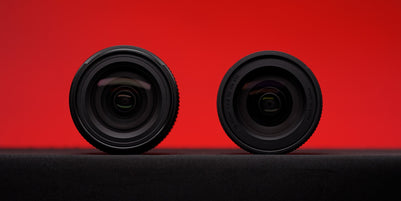
Tamron 16-50mm F2.8 vs Sigma 18-50mm F2.8: Which Compact APS-...
If you shoot on an APS-C mirrorless camera and want one lens that stays on the body most of the time, there's a good chance the Sigma 18-50mm F2.8 DC DN Contemporary...
View post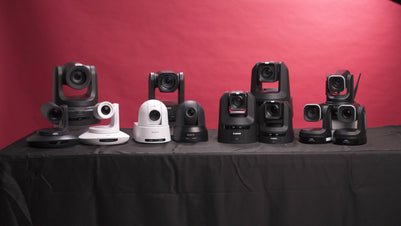
The Ultimate Guide to PTZ Cameras: Choosing the Right Setup f...
Compare Canon, Sony, BirdDog and Telycam PTZ cameras on image quality, tracking, zoom and value. Find the right setup for your production at Georges Cameras.
View post
Beauty Lighting: How to Combine Hard and Soft Light to Make S...
A working beauty photographer’s guide to combining hard and soft light, beauty dish vs softbox, grids, negative fill and a clamshell setup you can copy, for skin that pops.
View post
Everyone Can Take a Picture. Not Everyone Can Hold the Room
What an agent, a Vogue visuals producer and a brand-side creative lead really look for in photographers now. There is a point in almost every creative career where the work alone stops...
View post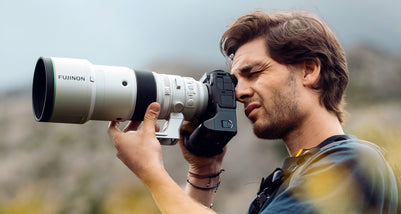
Beyond Reach: My Experience With the Fujifilm XF400mmF4.5 Sup...
Explore our hands-on experience with the Fujifilm XF400mmF4.5, covering its sharpness, autofocus, reach and performance for sport, wildlife, landscapes and portraits.
View post
Learn to Get the Shot Right In-Camera
Beauty photography tips from Oliver Minnett’s Georges workshop, covering lighting, direction, working with a creative team, and using Sony and Profoto gear.
View post
Stop Trying to Learn Everything at Once
Beauty photography tips from Oliver Minnett’s Georges workshop, covering lighting, direction, working with a creative team, and using Sony and Profoto gear.
View post
Beauty Photography Tips: Three Things I Wish I Knew Earlier
Beauty photography tips from Oliver Minnett’s Georges workshop, covering lighting, direction, working with a creative team, and using Sony and Profoto gear.
View post
How We Lit Karla Spetic's Australian Fashion Week Show with P...
We were invited by Karla Spetic to help light her runway, we chose Profoto's new LED lights for the job!
View post
Sony A7R VI First Thoughts: A Portrait Photographer’s Take on...
Sony has just launched the new Sony A7R VI, the latest camera in its high-resolution Alpha line, and I was lucky enough to spend some time with it earlier this week. I...
View post


